

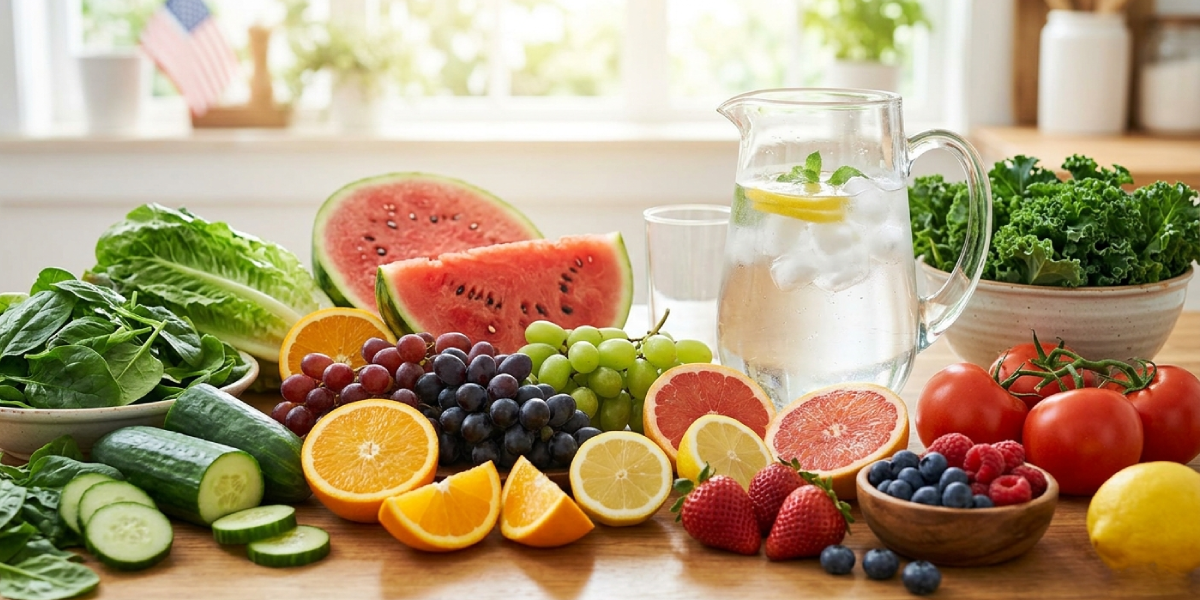
The best foods to eat to stay hydrated are water-rich fruits, vegetables, soups, and dairy that replace fluids your body loses every day. I have spent years tracking hydration habits with clients, and the pattern is always the same: people who eat more water-dense foods feel less sluggish, get fewer headaches, and need less effort to hit their daily fluid goals. This guide breaks down exactly which foods work best, why they work, and how to fit them into a realistic American diet.
Why Food-Based Hydration Matters
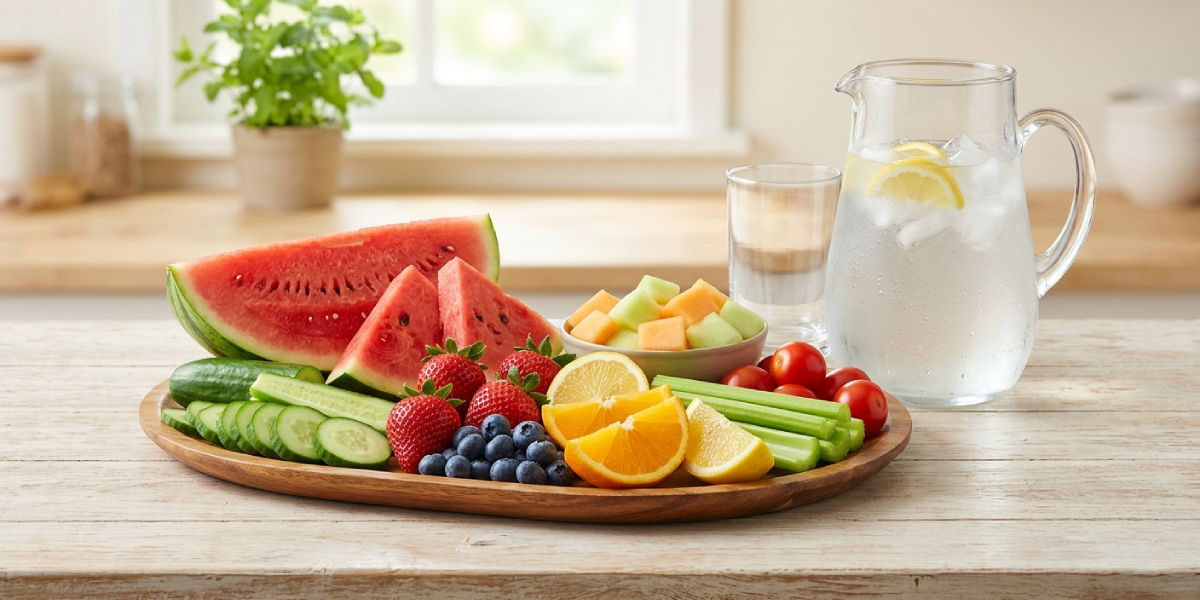
Most people assume hydration is only about how many glasses of water they drink. In practice, food supplies roughly a fifth of the total fluid the average person consumes in a day. That number climbs even higher for anyone who eats a lot of fruit, vegetables, soup, or dairy. Cells, muscles, and organs all depend on a steady fluid supply to function, and water-rich foods deliver that fluid alongside vitamins, minerals, and fiber that plain water cannot provide.
This matters more in the United States than people realize. Hot, humid summers across the South, dry heat in the Southwest, and indoor heating in Northern winters all increase fluid loss in different ways. Pairing smart food choices with the right amount of physical activity, which you can read more about in our exercise resources, gives you a more complete approach to staying properly hydrated year-round.
How Much Water Do You Actually Need
There is no single magic number that fits everyone. Your fluid needs depend on your age, sex, activity level, climate, and overall health. General reference intakes suggest adequately hydrated women average around 11.5 cups of total fluids a day, while men average closer to 15.5 cups, counting water, beverages, and food combined. Rather than obsessing over ounces, a simpler approach is to let thirst and urine color guide you. Pale yellow urine is a reliable sign you are well hydrated, while dark yellow is a signal to drink more.
Body size also plays a role in fluid requirements, since larger body mass generally needs more water to maintain proper function. If you are unsure where you stand, our BMI calculator can help you understand your body composition as part of a bigger picture that includes hydration, nutrition, and activity.
Top Hydrating Fruits to Eat in the US
Fruit is one of the easiest ways to boost hydration because it tastes good, requires no preparation, and is widely available in grocery stores across the country.
Watermelon
Watermelon is roughly 92 percent water by weight, making it one of the most hydrating fruits you can buy. It also delivers vitamin C and antioxidants like lycopene, and it is inexpensive and in season throughout summer across most of the US.
Strawberries
Strawberries are nearly all water and pack a meaningful amount of vitamin C and fiber into a low-calorie snack. They work well blended into a morning smoothie or added whole to cereal or yogurt.
Cantaloupe and Honeydew Melon
Both melons are excellent sources of hydration and provide potassium, an electrolyte that helps your body retain the fluid you drink rather than losing it quickly through urination.
Peaches and Oranges
Peaches are about 88 percent water, and oranges combine high water content with vitamin C and natural sugars that can help replace electrolytes after light exercise or time outdoors in the heat.
| Food | Approximate Water Content | Key Nutrients |
|---|---|---|
| Watermelon | 92% | Vitamin C, lycopene |
| Cucumber | 95% | Potassium, vitamin K |
| Celery | 95% | Fiber, folate |
| Strawberries | 91% | Vitamin C, antioxidants |
| Romaine Lettuce | 95% | Vitamin A, vitamin K |
| Zucchini | 95% | Fiber, potassium |
| Broccoli | 90% | Vitamin C, fiber |
| Plain Yogurt | 85% | Protein, calcium |
Top Hydrating Vegetables to Eat in the US
Vegetables tend to have an even higher water content than fruit, and several common American staples fall into the 90 to 95 percent water range.
Cucumber
Cucumber is one of the highest water-content vegetables available, sitting around 95 percent water. It is a popular addition to infused water pitchers, salads, and sandwiches, and it brings a small amount of potassium and magnesium along with it.
Celery
A single cup of celery contains well over 100 grams of water. It is low in calories and a convenient snack on its own or paired with hummus or peanut butter.
Romaine Lettuce and Iceberg Lettuce
Both lettuce varieties are made up of over 95 percent water. While they are not the most nutrient-dense leafy greens, they still contribute fiber, vitamin A, and vitamin K to your diet while supporting hydration.
Zucchini, Tomatoes, and Bell Peppers
These three vegetables are easy to add to almost any meal. Zucchini and tomatoes both sit around 94 to 95 percent water, and tomatoes additionally provide lycopene, a compound linked to heart health.
Hydrating Dairy, Soups, and Broths
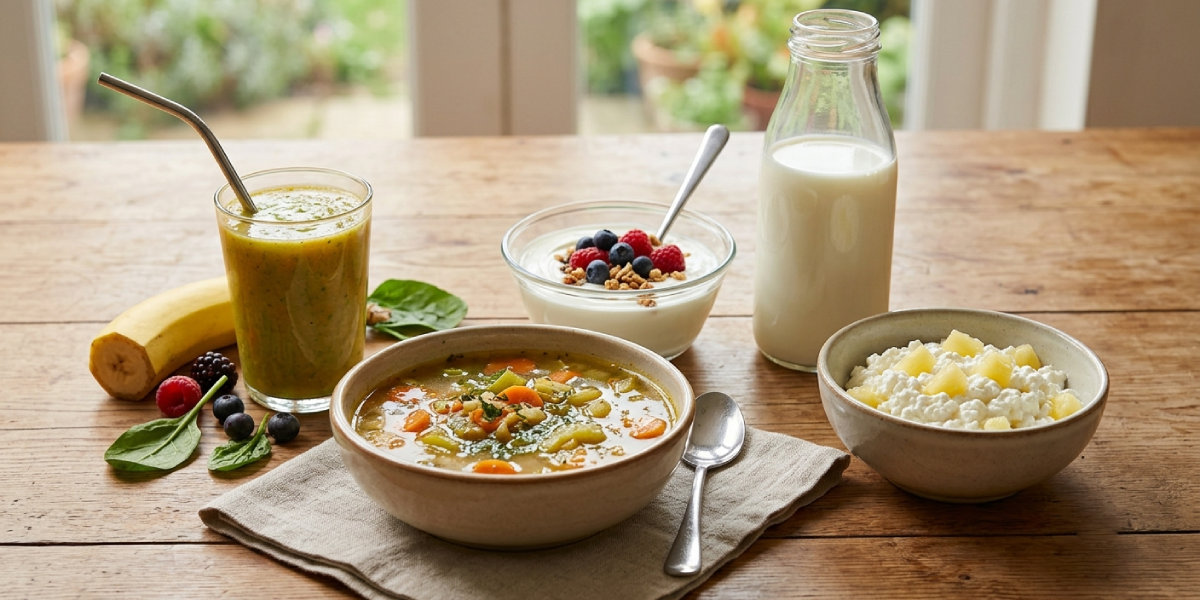
Liquid-based meals are an underrated hydration tool. A bowl of vegetable soup or broth-based dish can deliver a substantial amount of fluid alongside protein, sodium, and other electrolytes your body needs after sweating. Plain yogurt, milk, and cottage cheese also count toward your daily fluid total, since dairy products are roughly 85 to 90 percent water.
Smoothies blending fruit, vegetables, and milk or a plant-based alternative are an efficient way to combine several hydrating foods into a single meal, which is especially useful for people who struggle to eat enough produce during a busy workday.
Foods and Drinks That Work Against Hydration
Some common foods and beverages can undercut your hydration efforts even though they contain liquid. Alcohol acts as a diuretic, increasing fluid loss through urination. Highly salty processed snacks pull water out of your cells to balance excess sodium. Sugary sodas and sweetened juices can also work against hydration goals because of their high sugar content, even though they contain water. The 2025-2030 federal nutrition guidance specifically encourages choosing water and unsweetened beverages as the primary source of fluid, while keeping added sugar and sodium intake within recommended daily limits.
Practical Ways to Build Hydrating Foods Into Your Day
Small, consistent changes tend to work better than trying to overhaul your entire diet overnight. A few strategies that consistently work for the people I have coached include:
- Start the day with a fruit-and-yogurt smoothie instead of a dry breakfast
- Add a handful of berries or cucumber slices to lunch
- Keep cut celery, bell pepper, or melon in the fridge for easy snacking
- Choose a broth-based soup instead of a cream-based one when eating out
- Pair a glass of water with every meal rather than relying on food alone
Combining these habits with regular movement helps your body regulate fluid balance more efficiently. If you want structured guidance on building an active routine that supports overall wellness, our health category has additional practical resources worth exploring.
Signs You May Need More Hydrating Foods
Mild dehydration is common and often goes unnoticed. Watch for these signals:
- Dark yellow urine instead of pale yellow
- Persistent fatigue or low energy in the afternoon
- Dry mouth, lips, or skin
- Headaches that improve after drinking water
- Reduced urination frequency throughout the day
If these symptoms persist despite increasing fluid and food intake, it is worth speaking with a healthcare provider, particularly for older adults, people managing chronic conditions, or anyone taking medications that affect fluid balance.
Frequently Asked Questions
What is the most hydrating food you can eat?
Cucumber and celery are among the most hydrating foods available, both containing about 95 percent water by weight, alongside electrolytes and fiber.
Can eating fruit replace drinking water?
Fruit can supplement your fluid intake significantly, but it should not fully replace water. Most fruits provide water alongside sugar and fiber, so a balance of plain water and water-rich foods works best.
Does coffee count toward hydration?
Yes. While caffeine has a mild diuretic effect, coffee and tea still contribute net fluid to your daily intake when consumed in moderate amounts.
How much water is in an average diet from food alone?
Food typically supplies about 20 percent of total daily fluid intake for people who eat a normal amount of fruits, vegetables, soups, and dairy.
What foods should I avoid if I want to stay hydrated?
Limit alcohol, sugary sodas, and heavily salted processed snacks, since these can increase fluid loss or encourage the body to retain less water efficiently.
Is watermelon really that hydrating?
Yes. Watermelon is approximately 92 percent water and also provides vitamin C, potassium, and antioxidants, making it one of the best hydrating fruits available in the US.
How can I tell if I am dehydrated?
Dark urine, fatigue, dry mouth, and headaches are common early signs. Pale yellow urine generally indicates adequate hydration.
Do soups and broths count as hydration?
Yes. Broth-based soups are largely water and also supply sodium and other electrolytes, making them an effective hydration source, especially after exercise or illness.
Should hydration needs change with exercise?
Yes. Physical activity increases fluid loss through sweat, so people who exercise regularly often need more water and electrolyte-rich foods than those with a sedentary routine.
Are electrolyte drinks necessary for everyday hydration?
For most people doing moderate daily activity, water and water-rich foods are sufficient. Electrolyte drinks are more useful during intense or prolonged exercise, hot weather exposure, or illness involving fluid loss.