


If you exercise for better posture, you are already one step ahead of the millions of people who silently accept back pain, a forward head, and rounded shoulders as the price of a desk job.
The average office worker spends between six and nine hours seated every day, and over time, that chronic stillness rewires how your muscles fire, how your joints align, and how you hold yourself when you finally stand up. The good news is that targeted movement can reverse most of this damage, often faster than people expect.
This guide is built on practical experience and established exercise science. Whether you are a remote worker, a student, or someone who commutes and then sits at a screen for eight hours, the strategies below are designed to fit into real life, not just a gym with perfect equipment.
Why Sitting All Day Destroys Your Posture
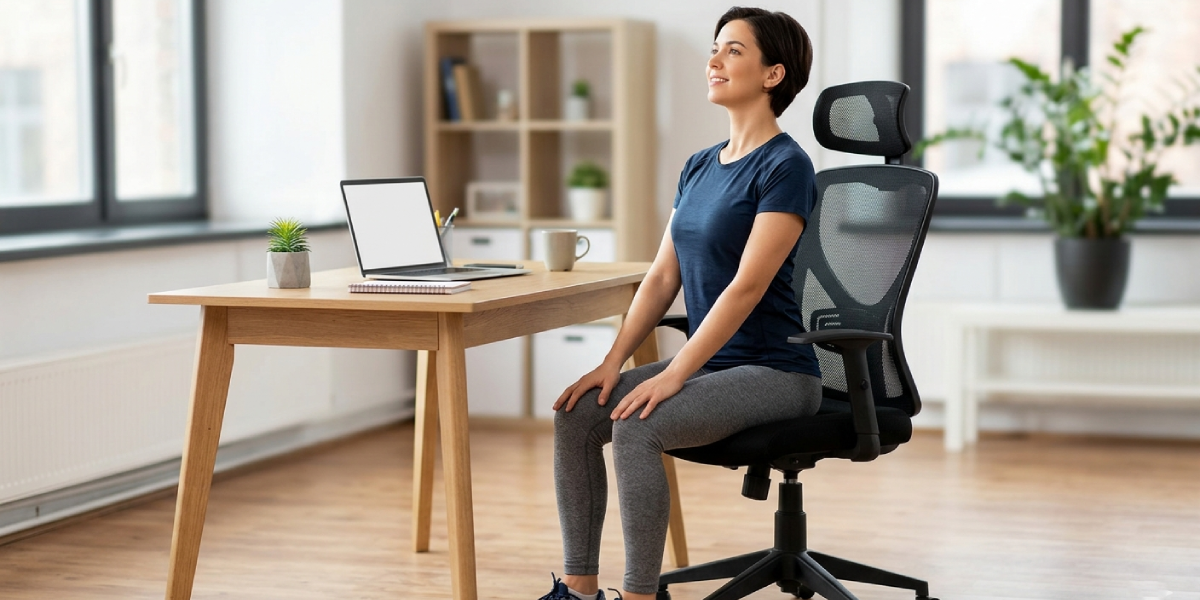
Before diving into the exercises, it helps to understand what is actually happening inside your body when you sit for extended periods. Posture is not simply about willpower or remembering to sit up straight. It is a product of muscle balance, joint mobility, and neurological habits built over months and years.
When you sit, your hip flexors stay in a shortened position for hours at a time. Over weeks, they adapt and become chronically tight. Tight hip flexors tug your pelvis into an anterior tilt, which in turn compresses your lower back and causes your glutes to become inhibited and weak.
This is sometimes called gluteal amnesia, a condition where the glutes essentially forget how to fire properly because they are never called upon.
At the same time, the muscles of your upper back, particularly the lower and middle trapezius and the rhomboids, become long and overstretched from shoulders rolling forward toward a keyboard or phone screen. Your chest muscles, especially the pectoralis minor, shorten and pull the shoulders inward.
The deep cervical flexors in your neck weaken as your head migrates forward to look at a screen, placing up to 60 pounds of additional force on the cervical spine for every inch of forward displacement.
The result is the classic desk-worker posture: forward head, rounded shoulders, excessive lumbar curve or a flat back, and weak glutes. Knowing this pattern is essential because the exercises that fix posture must directly address each of these dysfunctions.
The Foundation: What Good Posture Actually Requires
Good posture is not about being rigid or military-straight. It is about having the muscular strength and joint mobility to maintain a neutral, effortless alignment without chronic tension. That means three things must work together: mobility in the joints that have become stiff, strength in the muscles that have become weak, and neuromuscular awareness, the ability to feel and control your alignment in real time.
Any posture correction program that only stretches without strengthening, or only strengthens without improving mobility, will fall short. The approach below addresses all three pillars.
Essential Stretches to Undo the Damage of Sitting
Hip Flexor Stretch
The kneeling hip flexor stretch, sometimes called a half-kneeling lunge, directly targets the psoas and iliacus, the two primary hip flexors that shorten during prolonged sitting. Kneel on one knee with the other foot forward in a 90-degree position.
Tuck your pelvis slightly by squeezing the glute of your back leg, then shift your weight forward until you feel a deep stretch in the front of the hip of the back leg. Hold for 30 to 45 seconds, then switch sides. Doing this twice daily produces noticeable results within two weeks.
Doorway Chest Opener
Stand in a doorway and place both forearms on the frame at about shoulder height, with elbows bent to 90 degrees. Step one foot forward through the doorway and lean your chest gently through the opening until you feel a stretch across the front of your chest and the front of your shoulders.
This stretch lengthens the pectoralis major and minor that have tightened from forward-reaching. Hold for 20 to 30 seconds and repeat three times.
Thoracic Extension Over a Foam Roller
The thoracic spine, the middle portion of your back, loses its natural curve in desk workers, becoming flat or even reversing into a kyphotic hump. Place a foam roller horizontally across your mid-back, support your head with your hands, and gently extend backward over the roller.
Move it slowly up and down the thoracic region, pausing on stiff segments. One to two minutes daily can meaningfully restore thoracic mobility, which directly improves shoulder positioning and reduces neck strain.
Chin Tucks
This deceptively simple exercise reverses forward head posture by reactivating the deep cervical flexors. Sitting or standing tall, gently draw your chin straight back, as if making a double chin. Hold for five seconds and release. Aim for ten repetitions, three times daily. Over time, this retrains the neck to sit directly above the shoulders rather than jutting forward.
Strength Exercises for Posture You Can Do Anywhere
Stretching alone will not correct poor posture if the muscles responsible for maintaining alignment remain weak. These targeted exercises rebuild the strength your posture needs to hold itself up without constant effort.
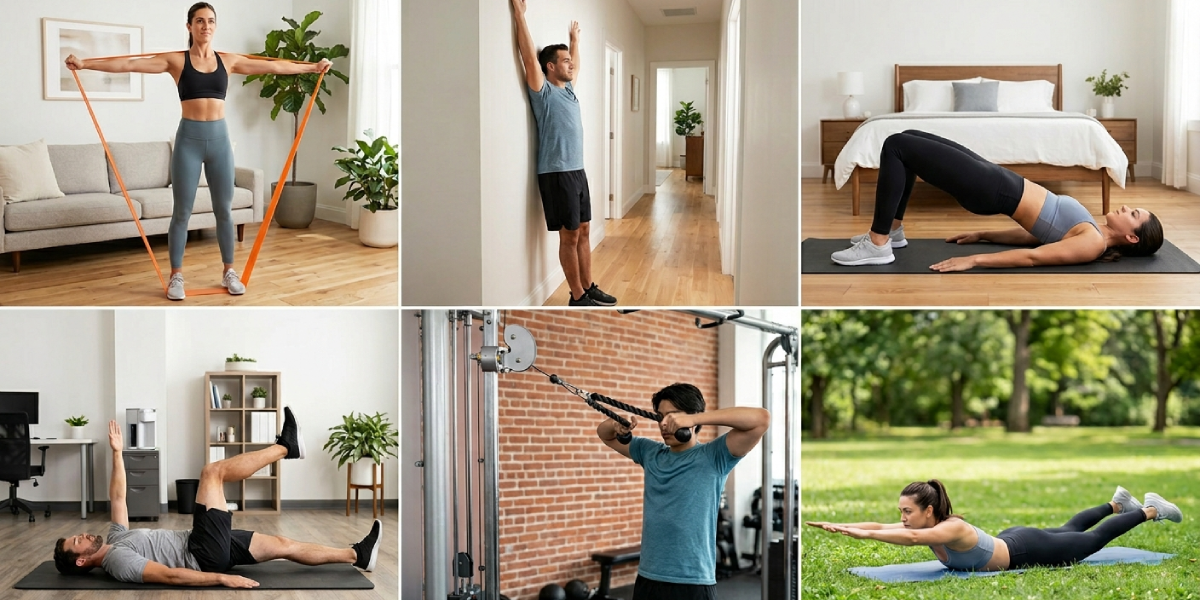
Band Pull-Aparts
Hold a resistance band at shoulder width with arms extended in front of you. Pull the band apart horizontally by squeezing your shoulder blades together, keeping your arms straight. Control the return. This exercise directly targets the rear deltoids, rhomboids, and mid-trapezius, the three muscle groups most responsible for pulling the shoulders back into proper alignment. Three sets of 15 repetitions daily is a simple and highly effective starting point.
Wall Angels
Stand with your back flat against a wall, feet about two inches from the baseboard, and press your lower back, upper back, and head firmly into the wall. Raise your arms into a goalpost position with elbows bent at 90 degrees and pressed to the wall. Slowly slide your arms upward along the wall until they are straight overhead, then return.
The challenge is keeping every part of your back and arms in contact with the wall throughout. This exercise trains thoracic extension, shoulder mobility, and serratus anterior activation simultaneously.
Glute Bridges
Lie on your back with knees bent and feet flat on the floor. Press through your heels, squeeze your glutes, and lift your hips until your body forms a straight line from knees to shoulders. Hold at the top for two seconds, then lower slowly. Glute bridges directly counter gluteal amnesia and reduce the anterior pelvic tilt caused by tight hip flexors.
Performing three sets of 12 to 15 reps daily is enough to see meaningful change in pelvic alignment within three to four weeks.
Dead Bug
Lie on your back with arms pointing straight up toward the ceiling and knees bent at 90 degrees, shins parallel to the floor. Slowly lower your right arm behind your head while simultaneously extending your left leg toward the floor, keeping your lower back pressed firmly into the ground. Return to start and alternate sides.
The dead bug builds deep core stability, which is the foundation that supports upright posture throughout the day even when you are not thinking about it.
Face Pulls
Using a cable machine or resistance band anchored at face height, pull the band or cable toward your face with elbows high and wide, externally rotating your shoulders at the end of the movement. Face pulls target the rear deltoids, lower trapezius, and external rotators of the shoulder, muscles that are almost universally weak in desk workers. They are one of the highest-return exercises for correcting rounded shoulder posture.
Reverse Hypertensions or Superman Holds
If you do not have access to a reverse hypertension machine, the superman hold is an accessible alternative. Lie face down on the floor with arms extended overhead. Simultaneously lift your arms, chest, and legs off the ground by engaging your lower back and glutes.
Hold for two to three seconds and lower. This strengthens the posterior chain, including the erector spinae, glutes, and hamstrings, which collectively support the lumbar spine and help maintain an upright posture when sitting and standing.
How to Structure Your Posture Workout Week
Consistency matters more than intensity when it comes to posture correction. A few minutes done daily beats an hour-long session once a week. Here is a practical weekly structure that fits into a busy schedule.
| Day | Focus | Duration |
|---|---|---|
| Monday | Glute bridges, dead bug, hip flexor stretch | 15 minutes |
| Tuesday | Band pull-aparts, face pulls, doorway chest stretch | 15 minutes |
| Wednesday | Wall angels, foam roller thoracic work, chin tucks | 15 minutes |
| Thursday | Full routine: all mobility and strength exercises | 30 minutes |
| Friday | Repeat Monday or Tuesday based on tightest areas | 15 minutes |
| Weekend | Light walking, active stretching, rest | Open |
Daily micro-habits also matter: set a timer to stand and move for two minutes every 45 to 60 minutes of sitting, do ten chin tucks every time you use the bathroom, and practice shoulder blade squeezes while waiting for pages to load.
The Role of Overall Health and Body Composition
Posture is also influenced by overall health and body composition. Excess abdominal weight shifts the center of gravity forward, increasing lower back strain and making it harder to maintain a neutral pelvis. If you suspect your weight may be contributing to posture problems, using a BMI calculator is a practical first step to assess where you stand and guide your overall wellness goals alongside your posture training.
Common Posture Mistakes That Slow Progress
- Stretching without strengthening: Loosening tight muscles without building the antagonists that hold alignment leaves you flexible but structurally unsupported.
- Ignoring the thoracic spine: Most people focus on the neck and lower back but skip the mid-back, which is often the root cause of both.
- Training only the muscles you can see: Chest and bicep-dominant training worsens the forward-shoulder imbalance. Prioritize the posterior chain and upper back.
- Expecting overnight results: Structural adaptation takes time. Commit to eight to twelve weeks before evaluating progress.
- Using a standing desk incorrectly: Standing all day with poor alignment is no better than sitting. A standing desk works only when combined with movement variety and proper ergonomics.
Ergonomics: The Environmental Side of Posture
Exercise is the most important tool for posture correction, but your environment either supports or undermines your progress for eight or more hours a day. A few key adjustments make a significant difference.
Your monitor should sit at eye level, about an arm’s length away. If you are looking down at a laptop screen for hours, a laptop stand and external keyboard are not optional luxuries but practical health investments. Your chair should allow your hips to sit slightly higher than your knees, with your feet flat on the floor and your elbows at approximately 90 degrees when typing. If your feet do not reach the floor comfortably, use a footrest.
Lumbar support matters too. Either use a chair with built-in lumbar support or place a small rolled towel behind your lower back at the natural curve of your lumbar spine. This simple addition reduces lower back fatigue and encourages the spine to maintain its natural S-curve throughout the day.
Frequently Asked Questions
How long does it take to see results from posture exercises?
Most people notice reduced muscle tension and improved awareness within two to four weeks of consistent daily practice. Visible postural changes, such as reduced forward head position and more upright shoulders, typically emerge between six and twelve weeks of regular training.
Can I fix my posture without going to a gym?
Yes. The majority of the most effective posture exercises, including glute bridges, chin tucks, dead bugs, wall angels, and hip flexor stretches, require no equipment at all. A resistance band, which costs very little, expands your options significantly with exercises like band pull-aparts and face pulls.
How many times a week should I do posture exercises?
Daily practice produces the best results, especially for mobility and light activation work. Strength-focused exercises like glute bridges and face pulls can be done five to six days a week with adequate recovery. Even ten to fifteen minutes of consistent daily work outperforms longer, infrequent sessions.
Is poor posture reversible at any age?
For the vast majority of people, yes. While some age-related changes in bone density and disc height are not fully reversible, the muscular imbalances that cause most desk-worker posture problems can be corrected at virtually any age. Older adults benefit enormously from targeted posture training, with improvements in balance, pain reduction, and functional movement as additional dividends.
What is the single best exercise for posture correction?
If forced to choose one, band pull-aparts or face pulls consistently rank highest for desk workers because they directly address the most common deficiency: weak upper back muscles and internally rotated shoulders. However, the hip flexor stretch is equally important for the lower body component of posture.
Does stretching alone improve posture?
Stretching addresses tightness and improves joint range of motion, which is necessary but not sufficient. Without strengthening the muscles that maintain alignment, the body lacks the structural support to hold improved posture passively. Effective posture correction always combines both mobility work and progressive strengthening.
Is it bad to use a lumbar support cushion?
Lumbar support cushions can be a useful tool, particularly during long work sessions, because they reduce fatigue and encourage a neutral lumbar curve. However, they should be used as a complement to posture exercises, not a replacement. Relying on passive support without building active muscular strength will not correct underlying imbalances.
How does walking help with posture?
Walking is one of the most underrated posture exercises available. It activates the glutes, requires reciprocal arm swing that mobilizes the thoracic spine, and breaks the static compression that sitting places on spinal discs. Even a brisk 10-minute walk every hour of desk work can meaningfully reduce the postural degradation caused by prolonged sitting.
Can poor posture cause headaches?
Yes. Forward head posture places significant mechanical stress on the upper cervical spine and the suboccipital muscles at the base of the skull. This compression and tension pattern is a well-documented trigger for cervicogenic headaches, which originate from the neck. Correcting head position through chin tucks and upper back strengthening can substantially reduce headache frequency in people whose headaches are posture-related.
Should I see a physiotherapist before starting posture exercises?
If you have pre-existing back or neck pain, a history of spinal injuries, disc herniation, or any pain that radiates into your arms or legs, consulting a physiotherapist or sports medicine physician before beginning a posture program is advisable. For most healthy adults with typical desk-worker posture issues, the exercises described in this article are safe to begin immediately.