

If you want to use the best stretching exercises to improve daily mobility, you are already making one of the smartest investments in your long-term health. Whether you spend most of your day sitting at a desk, standing on your feet, or recovering from an intense workout, targeted stretching can transform how your body feels and performs from morning to night.
Mobility is more than flexibility. Flexibility refers to how far a muscle can lengthen passively, while mobility describes your ability to actively move a joint through its full range of motion with control.
When your mobility is poor, everyday tasks like bending to pick something up, reaching overhead, or climbing stairs become harder and more painful than they need to be. Stretching consistently addresses both of these qualities and helps protect you from injury over time.
This guide walks you through evidence-based stretches used by physical therapists, strength coaches, and movement specialists around the world. You will learn which stretches target the most commonly restricted areas of the body, how long to hold each one, and how to build a practical daily routine that actually sticks.
Why Daily Mobility Work Matters More Than You Think
Most people only think about stretching when something hurts. By that point, tightness has already begun limiting your movement patterns and placing extra stress on surrounding joints. The hip flexors shorten from prolonged sitting, the thoracic spine loses its natural rotation, and the calves become stiff from hours in shoes with elevated heels.
Over time, these restrictions compound and contribute to back pain, knee problems, poor posture, and reduced athletic performance.
Research published in sports medicine journals consistently shows that regular static and dynamic stretching improves joint range of motion, reduces muscle soreness, and enhances neuromuscular coordination. The American College of Sports Medicine recommends stretching each major muscle group at least two to three times per week, though daily practice produces the most noticeable and lasting results.
Beyond the physical benefits, a short stretching routine creates a mindful pause in your day. The deliberate focus on breathing and body awareness during stretching activates the parasympathetic nervous system, helping reduce cortisol levels and improve mental clarity. Think of it as active recovery for both your body and your mind.
Understanding the Two Main Types of Stretching
Before diving into specific exercises, it helps to understand the difference between the two primary stretching methods and when to use each one.
Static Stretching
Static stretching involves holding a position for a sustained period, typically between 20 and 60 seconds, while the target muscle is at or near its end range of motion. This type of stretching is most effective after a workout or at the end of the day when your muscles are already warm.
It reduces muscle tension, improves long-term flexibility, and promotes relaxation. Avoid performing intense static stretches cold, as this can temporarily reduce muscle power output and increase injury risk if done immediately before high-intensity activity.
Dynamic Stretching
Dynamic stretching uses controlled, repetitive movement through a joint’s range of motion without holding the end position. Examples include leg swings, arm circles, hip circles, and walking lunges. This method is ideal as a warm-up before exercise or physical activity because it increases blood flow, warms up the joints, and activates the nervous system without reducing force production.
Dynamic stretching is also excellent first thing in the morning to gently wake up stiff tissues.
The Best Stretching Exercises to Improve Daily Mobility
The following exercises are selected based on the body areas most commonly affected by sedentary lifestyles, repetitive movements, and muscular imbalances. Incorporate these into your daily routine for comprehensive mobility improvement.
For a broader library of movement resources, explore these exercise guides and tutorials to complement your stretching practice.
1. Hip Flexor Lunge Stretch
The hip flexors, particularly the iliopsoas complex, are among the most chronically tight muscles in modern adults. Prolonged sitting keeps them in a shortened position for hours on end, which tilts the pelvis forward and compresses the lumbar spine.
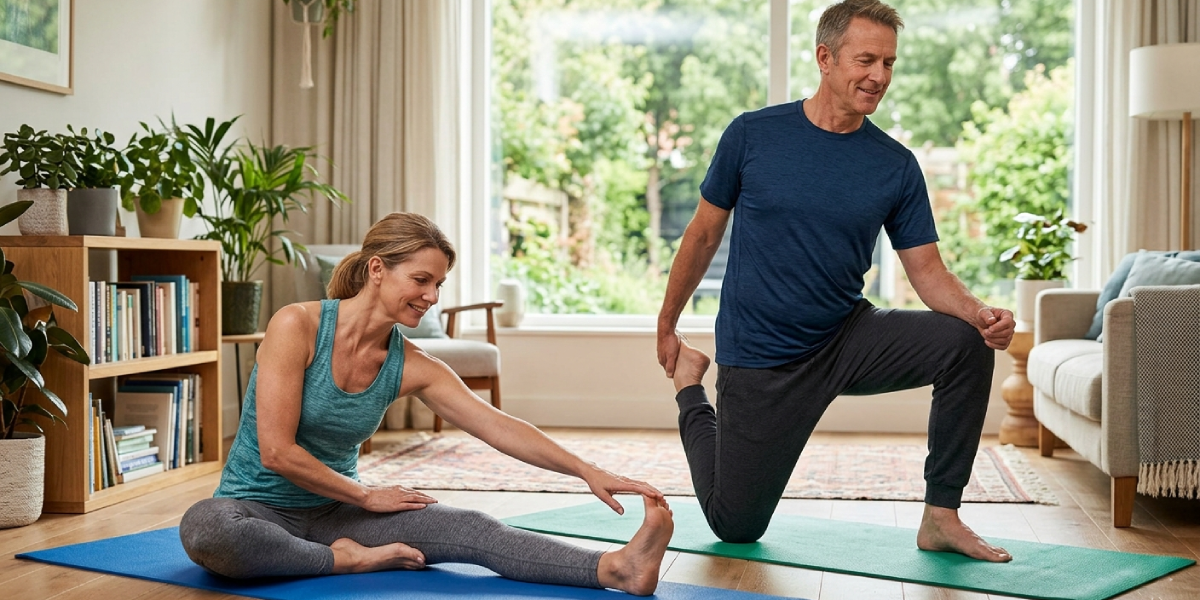
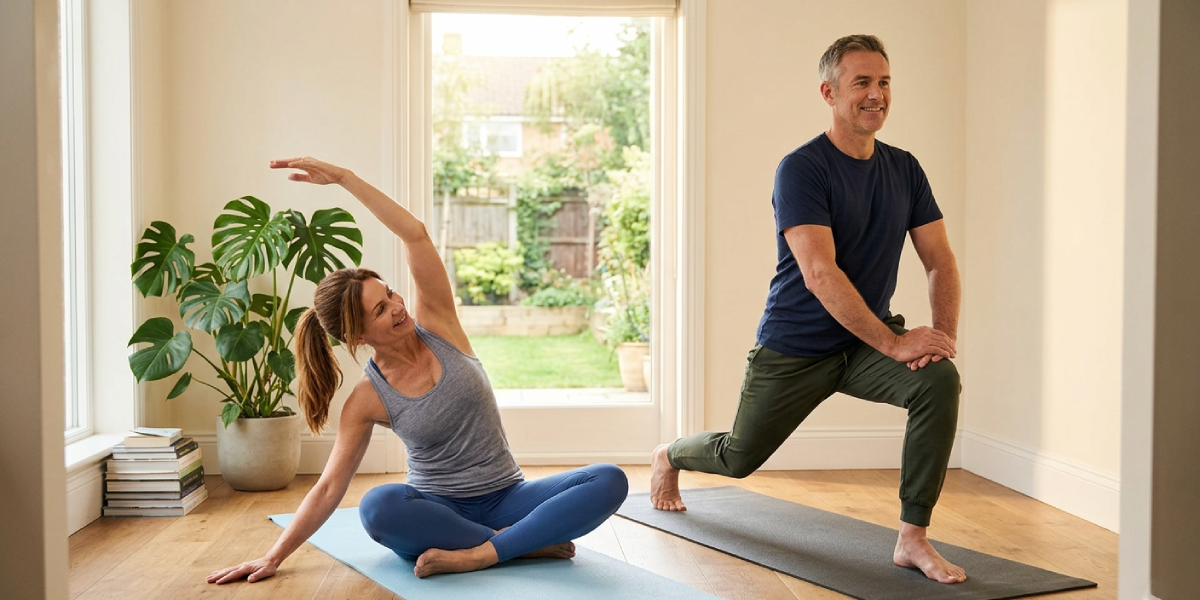
To perform this stretch, start in a tall kneeling position with one knee on the floor and the opposite foot planted in front of you at a 90-degree angle. Keeping your torso upright, gently shift your hips forward until you feel a deep stretch in the front of the rear hip and thigh.
Avoid arching your lower back. Hold for 30 to 45 seconds, then switch sides. Perform two to three repetitions per side daily.
2. Doorway Chest and Shoulder Stretch
Forward head posture and rounded shoulders are epidemic in the age of smartphones and laptop work. The pectorals and anterior deltoids become tight and overactive, while the upper back muscles become weak and overstretched.
This creates a muscular imbalance that contributes to neck pain, shoulder impingement, and reduced breathing capacity.
Stand in a doorway and place both forearms on the door frame at a 90-degree elbow angle. Step one foot forward and gently lean through the doorway until you feel a stretch across the front of your chest and shoulders. Hold for 30 seconds and repeat two to three times.
You can also vary the height of your arms to target different portions of the pectoral muscles.
3. Thoracic Spine Rotation
The mid-back, known as the thoracic spine, is supposed to be the primary rotational segment of the spine. When it becomes stiff, the lower back and cervical spine compensate by moving more than they should, leading to pain and degeneration over time. This stretch restores healthy rotation and reduces neck and low back tension.
Sit cross-legged on the floor or in a chair with a neutral spine. Place your right hand behind your head and rotate your upper body to the right as far as you comfortably can. Pause for two to three seconds, return to center, and repeat ten times on each side. Breathe deeply throughout to encourage rib cage expansion.
4. 90-90 Hip Stretch
The 90-90 position is one of the most comprehensive hip stretches available because it simultaneously addresses hip internal and external rotation, both of which are commonly restricted. Improved hip rotation reduces the risk of knee injuries, IT band tightness, and sacroiliac joint dysfunction.
Sit on the floor and position your front leg with the shin parallel to the front of your body, forming a 90-degree angle at the knee. Your rear leg should also form a 90-degree angle at the knee, with the shin pointing directly behind you. Sit upright and focus on keeping both hips as close to the floor as possible.
Hold for 45 to 60 seconds per side, breathing deeply into the stretch.
5. Cat-Cow Spinal Mobilization
Borrowed from yoga, the cat-cow sequence provides segmental mobility through the entire length of the spine and is one of the most gentle yet effective ways to reduce morning stiffness. It also engages the deep core stabilizers and helps synchronize breath with movement.
Begin on all fours with your wrists under your shoulders and knees under your hips. On an inhale, drop your belly toward the floor, lift your tailbone, and gaze gently upward (cow position). On an exhale, round your spine toward the ceiling, tuck your tailbone, and draw your chin to your chest (cat position). Perform ten to fifteen slow, controlled repetitions, moving with your breath.
6. Standing Quadriceps Stretch
Tight quadriceps compress the knee joint and limit hip extension, which affects everything from walking mechanics to squat depth. This classic stretch remains one of the most effective ways to address anterior thigh tightness.
Stand on one leg while bending the opposite knee and drawing the heel toward your glute. Use a wall for balance if needed. Keep your knees together and avoid tilting the pelvis forward. Hold for 30 to 45 seconds per side. For a deeper stretch, add a slight forward lean at the hip while maintaining the heel-to-glute position.
7. Seated Hamstring Stretch
Hamstring tightness is one of the leading contributors to lower back pain and restricted forward bending. Lengthening the hamstrings also improves posture and reduces strain on the posterior chain during lifting and walking.
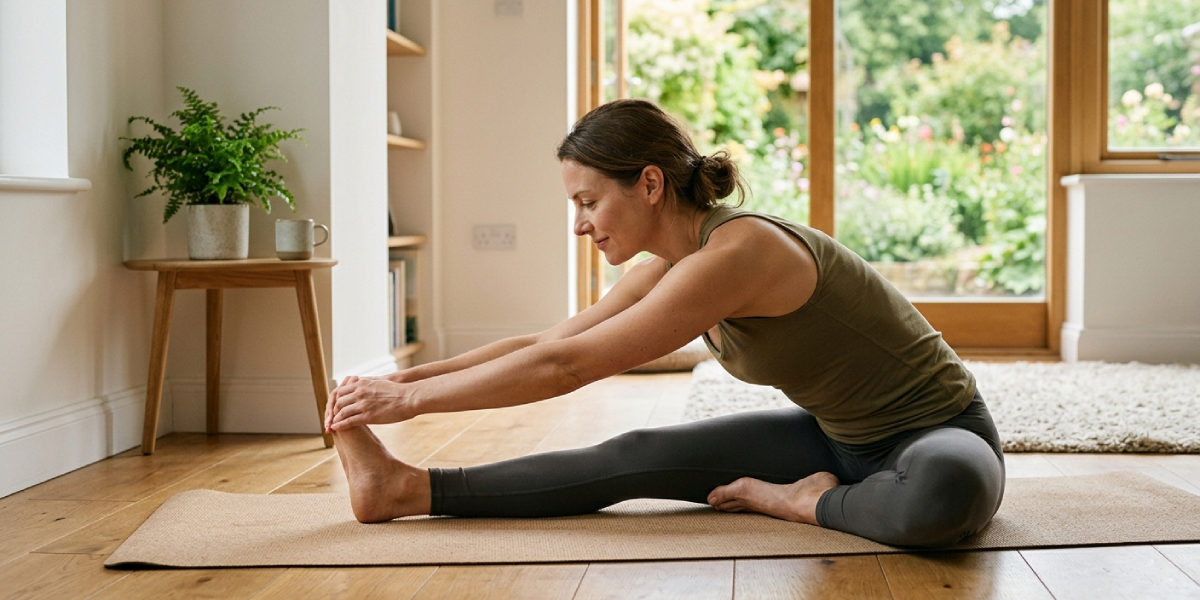
Sit on the floor with one leg extended straight and the other bent with the sole of the foot against the inner thigh of the extended leg. Hinge at the hips and reach toward the foot of the extended leg, keeping your back as flat as possible. Hold for 30 to 60 seconds per side. Focus on hinging from the hips rather than rounding the lower back, which reduces the therapeutic benefit.
8. World’s Greatest Stretch
This multi-joint movement earns its bold name by targeting the hip flexors, groin, thoracic spine, hamstrings, and ankles all in a single flowing sequence. It is a favorite warm-up among elite athletes and physical therapists alike.
Start in a push-up position. Step your right foot outside your right hand. Drop your right elbow to the floor and hold for two seconds, then rotate your right arm toward the ceiling, following it with your eyes. Return your hand to the floor, push your hips back to stretch your hamstring, and return to the starting position. Complete five repetitions on each side.
How to Build a Daily Stretching Routine
Consistency matters far more than intensity when it comes to mobility work. A targeted ten-minute routine performed daily will produce far greater results than an hour-long session once a week. Here is a practical framework to help you build the habit:
- Morning (5 to 10 minutes): Use dynamic stretches like the cat-cow, thoracic rotations, and leg swings to gently mobilize the body after sleep and prepare it for the day ahead.
- Midday (3 to 5 minutes): If you sit for work, use a standing hip flexor stretch and a doorway chest opener to counteract postural compression.
- Evening (10 to 15 minutes): End your day with static holds targeting the hips, hamstrings, and spine. This is the ideal time for deeper work because your tissues are fully warm and your nervous system is ready to relax.
Pair your stretching practice with attention to overall health behaviors. Hydration, sleep quality, and stress management all influence tissue pliability and recovery.
To better understand how your body composition and lifestyle factors interact with your movement health, tools like a BMI calculator can offer a useful starting point for assessing your general health status in combination with a professional evaluation.
Common Mistakes That Limit Your Mobility Progress
Even well-intentioned stretching routines can fall short if certain errors are made repeatedly. Understanding these pitfalls helps you get the most out of every session.
| Mistake | Why It Matters | What to Do Instead |
|---|---|---|
| Holding your breath | Increases muscular tension and reduces stretch effectiveness | Exhale slowly as you deepen into the stretch |
| Bouncing in static stretches | Triggers the stretch reflex and increases injury risk | Hold the position steadily without jerking movements |
| Skipping warm-up | Cold muscles tear more easily under stress | Walk briskly or do light movement for 5 minutes first |
| Stretching through pain | Sharp pain signals potential tissue damage | Work at a level of mild to moderate tension only |
| Only stretching one side | Creates or worsens muscular imbalances | Always complete the same sets on both sides |
| Inconsistent practice | Mobility gains are lost quickly without regular work | Set a specific daily time and treat it like an appointment |
Stretching for Specific Populations
Office Workers and Remote Professionals
Those who sit for six to eight hours a day should prioritize hip flexor lengthening, thoracic mobility, and chest opening. Integrate micro-stretching breaks every 45 to 60 minutes by standing up, doing five deep squats, and performing a brief doorway chest stretch.
These micro-breaks maintain tissue health even before your dedicated stretching session.
Older Adults
Mobility naturally declines with age as connective tissue loses water content and becomes less elastic. However, research consistently shows that older adults respond well to regular stretching programs, with measurable improvements in range of motion after just four to six weeks of consistent practice.
Gentle static stretches for the hips, calves, and spine are particularly valuable and can meaningfully reduce fall risk. Learn more about age-appropriate movement strategies in these health and wellness resources.
Active Athletes and Gym-Goers
Athletes benefit most from combining dynamic stretching before training with static stretching after. Sports involving repetitive single-plane motion, such as running or cycling, particularly benefit from rotational thoracic work and lateral hip stretches to address the muscular patterns these activities reinforce over time.
Frequently Asked Questions
How long should I hold each stretching exercise?
For static stretches, hold each position for 20 to 60 seconds. Research suggests that 30 seconds per stretch is a highly effective duration for most people. Dynamic stretches, by contrast, are performed as controlled repetitions rather than sustained holds, typically 10 to 15 reps per movement.
How often should I do stretching exercises to improve daily mobility?
Daily practice is ideal for improving mobility, particularly if you have existing tightness or movement restrictions. At minimum, aim for five to seven sessions per week for the best long-term results. Even short five to ten minute sessions performed consistently will outperform longer but infrequent sessions.
Is it normal to feel sore after stretching?
Mild muscle fatigue or a gentle ache after an intensive stretching session can be normal, particularly if you are new to mobility work or worked an area that was severely restricted. However, sharp pain during or after stretching is not normal and may indicate you are overstretching. Always work within a comfortable range of tension.
Can stretching help with lower back pain?
Yes, targeted stretching is one of the most evidence-supported non-pharmacological approaches to managing and preventing lower back pain. Hip flexor stretches, hamstring stretches, and spinal mobility exercises like cat-cow reduce the compressive forces on lumbar discs and improve the muscular balance around the pelvis. Consult a healthcare professional for persistent or severe pain before starting a new program.
Should I stretch before or after exercise?
Dynamic stretching is best performed before exercise as part of your warm-up, as it prepares the joints and nervous system without reducing muscle power. Static stretching is most beneficial after exercise when the muscles are warm and most receptive to lengthening. Performing prolonged static stretches immediately before intense activity can temporarily reduce peak force output.
How quickly will I see improvements in mobility from daily stretching?
Many people notice initial improvements in how their body feels within one to two weeks of daily practice. Measurable improvements in range of motion are typically visible after four to six weeks. Significant structural changes in tissue length and joint mobility generally develop over three to six months of consistent work.
Can I improve mobility if I am not naturally flexible?
Absolutely. Natural flexibility has a genetic component, but mobility is a trainable quality that improves with dedicated practice regardless of your starting point. Some people will progress more quickly than others, but nearly everyone benefits meaningfully from regular, well-designed stretching work. Focus on your own progress rather than comparing your range of motion to others.
What is the difference between a stretch and a mobility exercise?
A stretch primarily lengthens a muscle passively or with minimal muscular engagement. A mobility exercise actively takes a joint through its full range of motion with muscular control. Both are valuable and complement each other well. Stretching improves tissue length while active mobility work builds the neuromuscular control needed to use that new range in real movement.
Is it safe to stretch every day?
For the vast majority of healthy individuals, daily stretching is not only safe but highly beneficial. The key is to work within a comfortable range, avoid overstretching, and vary the intensity. If you have a specific injury or medical condition, always consult a qualified healthcare professional or physiotherapist before beginning a new stretching program.
What time of day is best for stretching to improve mobility?
The optimal time depends on your goal. Dynamic stretching in the morning helps counteract overnight stiffness and prepares your body for the day. Evening static stretching, when your muscles are warmest from daily activity, tends to produce the deepest and most lasting improvements in range of motion. Both are effective, and the best time is ultimately whichever time you can commit to consistently.