


Understanding how exercise builds stronger bones is one of the most practical things you can do for your long-term health. Osteoporosis affects more than 200 million people worldwide, yet it remains one of the most preventable chronic conditions when physical activity is made a consistent priority throughout life.
Whether you are in your twenties trying to build peak bone mass or in your sixties working to preserve what you have, the right movement strategies can make a profound difference.
Why Bone Health Deserves More Attention Than It Gets
Bones are living tissue. They are constantly being broken down and rebuilt through a process called bone remodeling, driven by specialized cells called osteoclasts (which resorb old bone) and osteoblasts (which form new bone).
During childhood and adolescence, formation outpaces resorption, allowing bones to grow denser and stronger. Peak bone mass is typically reached between the ages of 25 and 30. After that, the balance gradually shifts, and adults begin to lose bone density at a slow but steady rate.
When bone loss accelerates beyond what the body can replace, osteoporosis develops. The condition causes bones to become porous and fragile, dramatically increasing the risk of fractures, particularly in the hip, spine, and wrist. Hip fractures in older adults are especially dangerous, with studies consistently linking them to significant declines in mobility and independence.
The encouraging news is that bone is highly responsive to mechanical stress. When you place physical demands on your skeleton, your body interprets those signals as a reason to invest in stronger, denser bone structure. This is the fundamental principle behind exercise as a bone health strategy.
The Science Behind Exercise and Bone Density
When muscles contract during physical activity, they pull on the bones they are attached to. This mechanical loading stimulates osteoblast activity and triggers a cascade of biological responses that reinforce bone tissue. The greater the mechanical force applied, the stronger the adaptive response, which is why certain types of exercise are more effective for bone building than others.
Research consistently shows that weight-bearing and resistance exercises are the most effective categories for improving bone mineral density. A landmark review published in the journal Osteoporosis International found that structured exercise programs could increase bone density in the lumbar spine and femoral neck by one to three percent over the course of 12 months.
While that may sound modest, maintaining or slightly improving bone density over time represents a meaningful departure from the natural trajectory of age-related bone loss.
Hormones also play a key role in this process. Exercise promotes the release of growth hormone and insulin-like growth factor 1 (IGF-1), both of which support bone formation. In women, estrogen is a critical protector of bone density, and while exercise cannot replace estrogen after menopause, it can partially offset the accelerated bone loss that occurs during and after menopause.
Best Types of Exercise for Building and Protecting Bone

Not all exercise is created equal when it comes to bone health. The most bone-friendly activities are those that involve impact, resistance, or both. Here is a breakdown of the most effective categories and why they work.
Weight-Bearing Aerobic Exercise
Weight-bearing aerobic activities are those in which your body works against gravity while keeping you upright. Walking, jogging, hiking, dancing, stair climbing, and jump rope all fall into this category. These activities stimulate bone formation in the lower extremities and spine by repeatedly loading the skeleton with the weight of your own body.
Among weight-bearing cardio options, high-impact activities such as jogging and dancing tend to produce greater bone benefits than low-impact options like walking. However, walking is still valuable, especially for older adults or those with joint concerns, because consistency matters enormously.
A daily 30-minute walk performed every day will do far more for your bones than an intense run done twice a month.
Resistance and Strength Training
Resistance training, which includes lifting weights, using resistance bands, and performing bodyweight exercises like squats and push-ups, is arguably the single most powerful tool available for building and maintaining bone density. When muscles exert force on bones through contraction, they stimulate osteoblast activity and encourage the deposition of new bone mineral.
Compound movements that recruit multiple muscle groups at once are particularly effective. Exercises such as squats, deadlifts, lunges, rows, and overhead presses place significant mechanical load on the spine, hips, and long bones of the arms and legs, which are the sites most vulnerable to osteoporotic fractures.
Incorporating two to three resistance training sessions per week, targeting all major muscle groups, provides a solid foundation for skeletal health at any age.
If you are unsure where to begin with strength training, exploring structured exercise programs tailored to your fitness level can help you build a safe and effective routine from the ground up.
Balance and Flexibility Training
While yoga, tai chi, and Pilates do not build bone density as directly as impact or resistance exercise, they play a crucial supporting role in bone health by improving balance, posture, and body awareness. Falls are the leading cause of fracture-related injuries in older adults, and many of those falls are preventable through better balance and coordination.
Incorporating balance training at least two to three times per week significantly reduces fall risk and, by extension, reduces the likelihood of the fractures that osteoporosis makes so dangerous.
High-Intensity Interval Training (HIIT)
HIIT workouts, which alternate short bursts of intense exercise with brief recovery periods, can deliver meaningful bone benefits when they incorporate jumping, bounding, or heavy resistance moves. The combination of cardiovascular intensity and mechanical loading makes HIIT a time-efficient option for those looking to support both heart health and bone density simultaneously.
As with all high-impact exercise, it is important to build intensity gradually, particularly for those new to exercise or with existing joint concerns.
How Exercise Frequency, Intensity, and Progression Affect Bone Outcomes
The principles of progressive overload, the same principle that drives muscle growth, also apply to bone adaptation. Bones adapt to the specific demands placed on them, which means the body eventually adjusts to a given level of mechanical stress and stops generating additional bone-building responses to that stimulus.
To continue gaining bone benefits, you need to periodically increase the challenge.
This does not mean you need to constantly lift heavier weights or run faster. It can mean adding more sets, reducing rest periods, introducing new movement patterns, or incorporating different types of loading. Variety in your exercise routine ensures that different regions of the skeleton are being stimulated, which provides broader protection across the entire skeletal system.
Frequency also matters. The American College of Sports Medicine recommends weight-bearing aerobic activity on most days of the week and resistance training at least two to three days per week for optimal bone health. Spreading sessions throughout the week rather than cramming them into a few consecutive days gives bone tissue time to respond and rebuild between sessions.
Exercise, Body Weight, and Bone Health
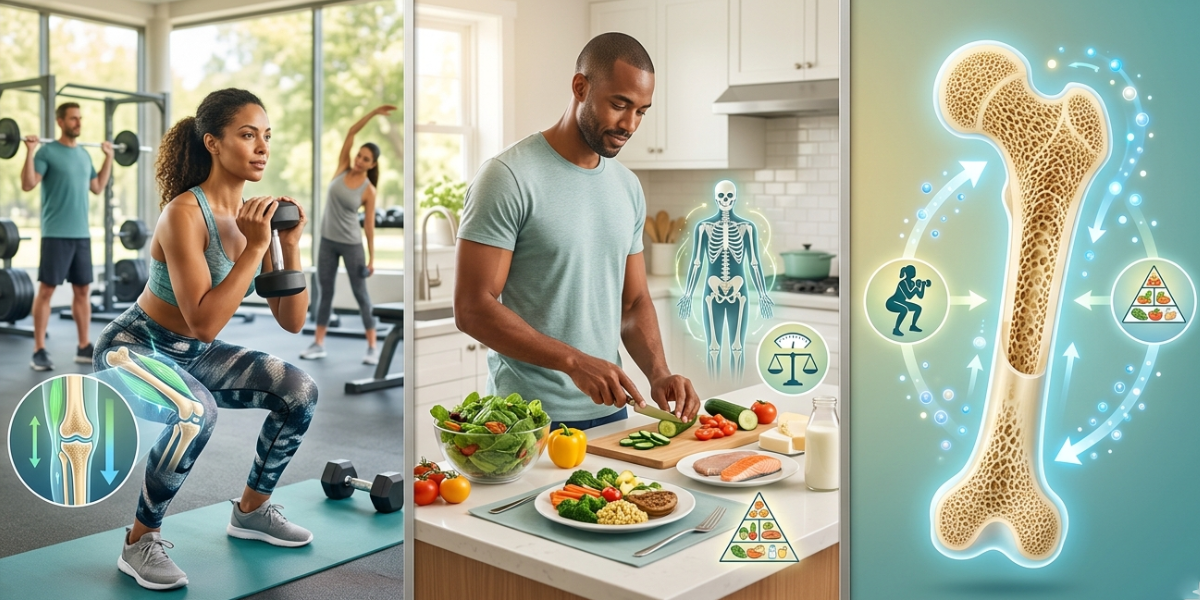
Body composition has a direct relationship with bone density. Muscle mass and bone density tend to increase and decrease together, which is one reason why resistance training is so effective. Fat tissue, on the other hand, exerts compressive forces on bones and contributes somewhat to bone loading, but excess adiposity is associated with hormonal disruptions that can actually impair bone quality.
Maintaining a healthy body weight through a combination of regular physical activity and balanced nutrition protects bones from both ends. Being significantly underweight is one of the strongest modifiable risk factors for osteoporosis, as low body weight means less mechanical loading and often reflects nutritional deficiencies that directly impair bone formation.
If you are curious about where your body weight falls in relation to health benchmarks, using a BMI calculator can give you a useful starting point for conversations with your healthcare provider.
Nutrition That Works Alongside Exercise to Support Bone Health
Exercise is the stimulus, but nutrition provides the raw materials. No exercise program can fully compensate for severe nutritional deficiencies that impair bone formation. The two most critical nutrients for bone health are calcium and vitamin D, but they are far from the only ones that matter.
Calcium is the primary mineral component of bone. Adults require approximately 1,000 to 1,200 milligrams of calcium per day depending on age and sex. Dairy products, fortified plant milks, leafy greens such as kale and bok choy, almonds, and canned fish with bones are among the best dietary sources.
Vitamin D is essential because it regulates calcium absorption in the gut; without adequate vitamin D, even a calcium-rich diet cannot effectively mineralize bone. Most adults benefit from a daily intake of 600 to 800 IU of vitamin D, with higher amounts sometimes appropriate for those with documented deficiency.
Protein is often overlooked in discussions of bone health, but it provides the collagen scaffold onto which calcium is deposited. Adequate protein intake, spread evenly across meals, supports both muscle and bone maintenance.
Magnesium, vitamin K2, phosphorus, and zinc also contribute to bone quality, reinforcing the importance of a diverse, whole-food diet alongside a consistent health and wellness routine.
Special Considerations by Age and Life Stage
Children and Adolescents
The years before peak bone mass is reached represent the greatest opportunity to build a strong skeletal foundation. Children and teenagers who participate in impact sports and regular physical activity develop higher peak bone mass, which provides a larger reserve against future bone loss.
Encouraging active play, sports participation, and physical education during these years has lifelong implications for bone health.
Adults in Their 30s and 40s
The focus during this life stage is on maintaining peak bone mass and slowing the natural rate of decline. Resistance training becomes increasingly important as muscle mass naturally begins to decrease with age. Prioritizing both cardiovascular fitness and strength work during this period creates habits that carry enormous dividends in later decades.
Postmenopausal Women
The rapid decline in estrogen after menopause accelerates bone loss dramatically, making this one of the highest-risk periods for developing osteoporosis. Exercise is particularly critical during and after this transition. High-impact weight-bearing exercise and resistance training have both been shown to attenuate postmenopausal bone loss, and the benefits extend to reducing fall risk, improving balance, and supporting overall cardiovascular health.
Older Men and Women
For older adults, the goal of exercise shifts somewhat toward preserving existing bone density and preventing falls. Low-impact weight-bearing exercise, balance training, and carefully supervised resistance training remain beneficial and safe for most healthy older adults.
Exercise also supports the muscle mass and neuromuscular coordination needed to catch oneself during a near-fall, which can be just as important as the effect of exercise on bone density itself.
Getting Started Safely
If you are new to exercise or have already been diagnosed with osteoporosis or low bone density, it is important to begin any new program thoughtfully. High-impact activities and heavy lifting may not be appropriate as a starting point for everyone, and working with a qualified exercise professional or physical therapist can help you identify the safest and most effective approach for your specific situation.
A comprehensive bone-health exercise program does not need to be complicated. Starting with walking daily, adding two bodyweight strength sessions per week, and incorporating balance work like standing on one foot or practicing yoga can produce meaningful benefits over time.
Consistency over months and years is what drives real change in bone density, and any start is a good start.
A Summary of Key Exercise Recommendations for Bone Health
| Exercise Type | Examples | Primary Benefit | Recommended Frequency |
|---|---|---|---|
| Weight-bearing aerobic | Walking, jogging, dancing, hiking | Loads spine and lower extremities | Most days of the week |
| Resistance training | Weightlifting, squats, resistance bands | Stimulates osteoblast activity throughout skeleton | 2 to 3 times per week |
| Balance and flexibility | Yoga, tai chi, balance exercises | Reduces fall risk | 2 to 3 times per week |
| High-impact activities | Jumping, skipping, HIIT | High mechanical loading for dense bone adaptation | 1 to 2 times per week as tolerated |
Frequently Asked Questions
How long does it take for exercise to improve bone density?
Meaningful changes in bone mineral density typically require at least 6 to 12 months of consistent exercise. Bone remodeling is a slow biological process, and studies generally measure outcomes over 12-month periods. However, fall-risk reduction and improvements in strength and balance can be noticed much sooner, often within 8 to 12 weeks of beginning a regular program.
Can you reverse osteoporosis through exercise?
Exercise can slow further bone loss and, in some cases, produce modest increases in bone density even in people already diagnosed with osteoporosis. It is not typically considered a cure, and severe osteoporosis often requires medical treatment in addition to lifestyle changes. That said, exercise remains one of the most powerful tools for managing the condition, reducing fracture risk, and improving overall quality of life.
Is walking enough to prevent osteoporosis?
Walking is beneficial and better than no activity, but it is generally not sufficient on its own to prevent osteoporosis, particularly in postmenopausal women who face accelerated bone loss. Combining walking with resistance training and higher-impact activities provides much stronger bone protection than walking alone.
What exercises should people with osteoporosis avoid?
People with osteoporosis should generally avoid high-impact activities that carry a significant fall risk, extreme spinal flexion or rotation (such as deep forward bends in yoga), and heavy lifting performed with poor form. Activities like rowing machines and certain ab exercises that forcefully flex the spine may also increase fracture risk in the vertebrae. Always consult a healthcare provider or physical therapist to tailor exercise recommendations to your individual bone health status.
Does swimming help build bone density?
Swimming is an excellent cardiovascular workout and is very joint-friendly, but it is not weight-bearing and therefore provides limited stimulus for bone formation. People who swim as their primary form of exercise should consider adding land-based weight-bearing or resistance activities to their routine to adequately support bone health.
At what age is it too late to start exercising for bone health?
It is never too late. Research shows that resistance training and weight-bearing exercise produce measurable bone benefits even in adults in their 70s, 80s, and beyond. While the magnitude of response may be smaller than in younger individuals, the benefits in terms of reduced fall risk, maintained muscle mass, and preserved bone density remain highly meaningful at any age.
How does vitamin D affect exercise outcomes for bone health?
Vitamin D is essential for calcium absorption and bone mineralization, and it also plays a direct role in muscle function. Vitamin D deficiency impairs the muscle strength and neuromuscular coordination needed for effective balance and fall prevention. Ensuring adequate vitamin D levels through sun exposure, diet, or supplementation enhances the bone-building response to exercise and supports the physical capacity needed to exercise safely and effectively.
How does stress and sleep affect bone health in active individuals?
Chronic psychological stress elevates cortisol levels, which suppresses bone formation and accelerates bone resorption over time. Poor sleep similarly disrupts the hormonal environment needed for bone repair and regeneration, as much of the bone remodeling process occurs during deep sleep. For active individuals, prioritizing sleep and stress management is an important complement to the exercise and nutrition strategies that directly target bone health.