

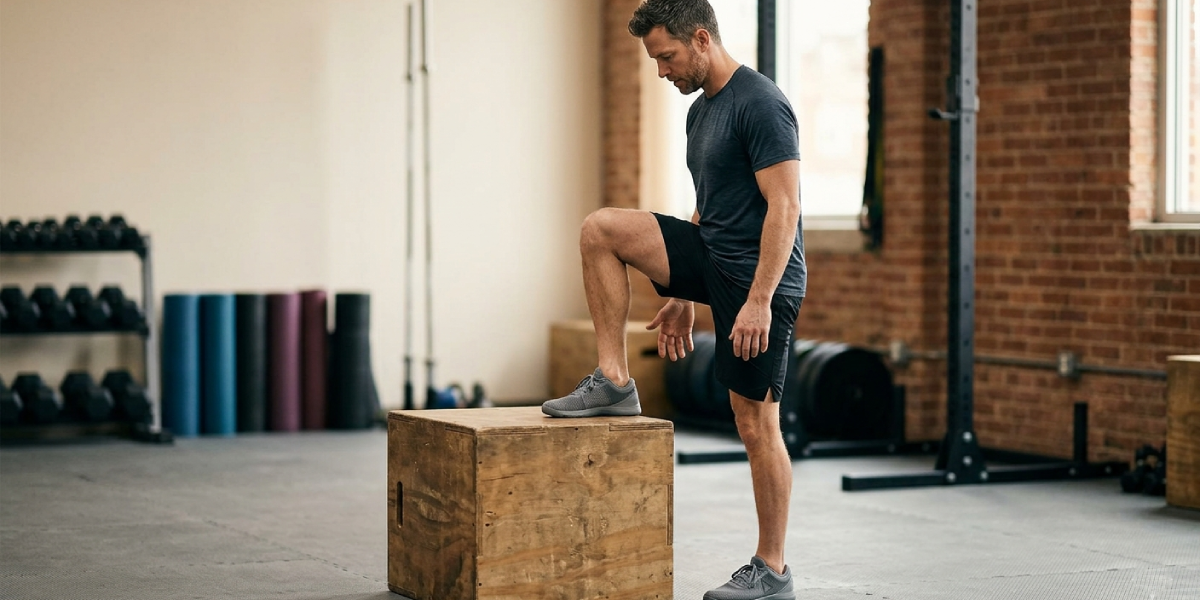
The Captain Morgan exercise is one of the most underrated functional movements in physical therapy and strength training. Named after the iconic rum mascot who stands with one foot propped on a surface and hands on hips, this exercise trains single-leg stability, hip abductor strength, and neuromuscular control in a way that directly transfers to everyday movement and athletic performance.
Whether you are recovering from a knee injury, working to correct a hip drop during running, or simply looking to build a more resilient lower body, the Captain Morgan exercise deserves a prominent place in your training routine.
What Is the Captain Morgan Exercise?
The Captain Morgan exercise is a single-leg stance drill that mimics the classic pose of the Captain Morgan rum logo. The movement requires you to stand on one leg with the opposite knee raised and bent at roughly 90 degrees, foot resting lightly on a surface such as a chair, wall, or step.
Your hands rest on your hips, and your goal is to maintain an upright, level pelvis without allowing it to drop or rotate.
In clinical and rehabilitation settings, this exercise is frequently prescribed to address gluteus medius weakness, which is a major contributor to conditions such as patellofemoral pain syndrome, iliotibial band syndrome, hip bursitis, and low back pain.
Physical therapists use it because it isolates hip abductor function in a position that closely mirrors the demands of walking, running, and stair climbing.
It may look deceptively simple, but sustaining a perfectly level pelvis on a single leg for any length of time demands genuine strength and coordination from the entire lateral hip chain. That challenge is exactly what makes it so effective.
Muscles Worked During the Captain Morgan Exercise
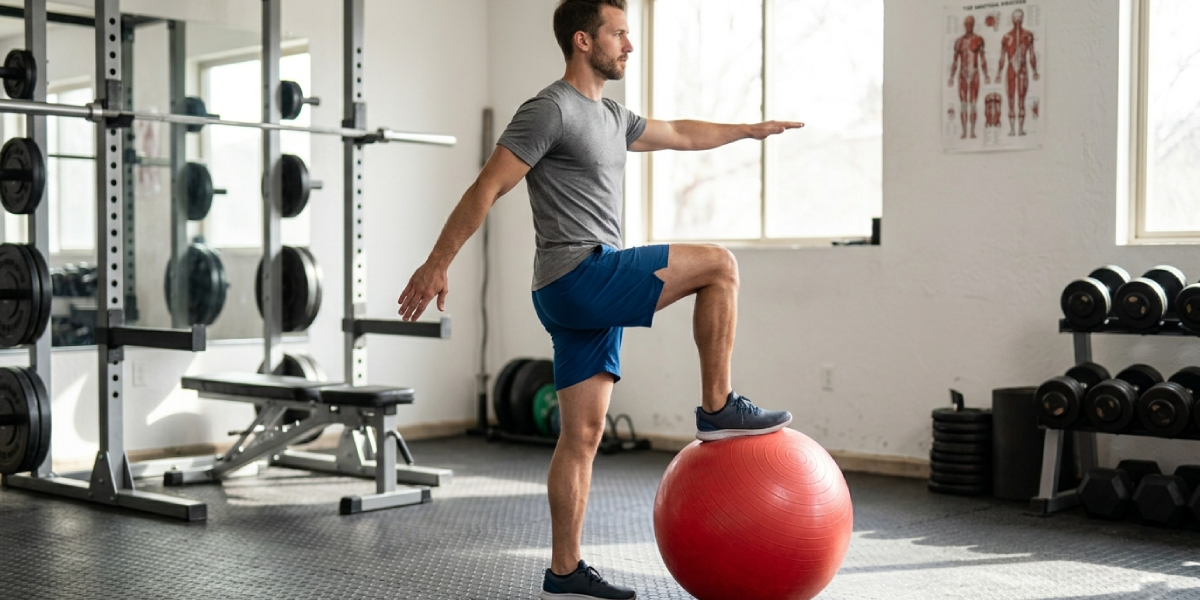
Understanding which muscles the Captain Morgan exercise targets helps you appreciate why it is so widely used and how to cue yourself for better activation.
- Gluteus medius: The primary muscle responsible for preventing the pelvis from dropping toward the unsupported side. This is the main target of the exercise.
- Gluteus minimus: Works alongside the gluteus medius to provide hip abduction and internal rotation control.
- Tensor fasciae latae (TFL): Assists in stabilizing the hip and maintaining the IT band’s tension during single-leg loading.
- Hip external rotators: Deep rotator muscles such as the piriformis and obturators contribute to rotational control of the stance leg.
- Quadriceps and hamstrings: The stance leg muscles work isometrically to maintain knee stability throughout the hold.
- Core stabilizers: The transverse abdominis, obliques, and erector spinae activate to prevent lateral trunk lean during the hold.
- Foot and ankle stabilizers: The peroneals and intrinsic foot muscles are challenged to maintain a stable base on the standing foot.
Benefits of the Captain Morgan Exercise
Incorporating the Captain Morgan exercise into your exercise routine offers a wide range of functional and clinical benefits.
Improved Hip Stability and Pelvic Control
When the gluteus medius is weak, the pelvis drops toward the non-stance side during walking and running, a deviation known as Trendelenburg gait. The Captain Morgan exercise directly trains the hip abductors to resist this drop, leading to cleaner movement mechanics and reduced joint stress across the hip, knee, and lower back.
Injury Prevention and Rehabilitation
A large body of clinical evidence links gluteus medius weakness to lower extremity overuse injuries. Strengthening this muscle through targeted exercises like the Captain Morgan drill has been shown to reduce the incidence and severity of knee pain, hip pain, and certain lower back conditions.
This makes it a cornerstone exercise in injury prevention programs for runners, cyclists, and team sport athletes.
Enhanced Balance and Proprioception
Single-leg exercises challenge the nervous system to integrate sensory information from the foot, ankle, and hip to maintain equilibrium. Regular practice of the Captain Morgan exercise trains proprioceptive pathways, which improves your ability to stabilize quickly when navigating uneven terrain or making sudden changes of direction.
Functional Carryover to Daily Life
Every step you take requires a brief single-leg stance phase. The coordination and strength built through this exercise translate directly into more efficient walking, pain-free stair climbing, and easier transitions from sitting to standing. For older adults, improving single-leg stability is one of the most evidence-supported strategies for fall prevention.
Low Impact and Accessible
Because the Captain Morgan exercise requires no equipment and places minimal compressive load on the joints, it is suitable for individuals across a broad spectrum of fitness levels and ages. It can be performed as a standalone drill, integrated into a dynamic warm-up, or used as an active rest exercise between heavier lower body sets.
How to Do the Captain Morgan Exercise Correctly
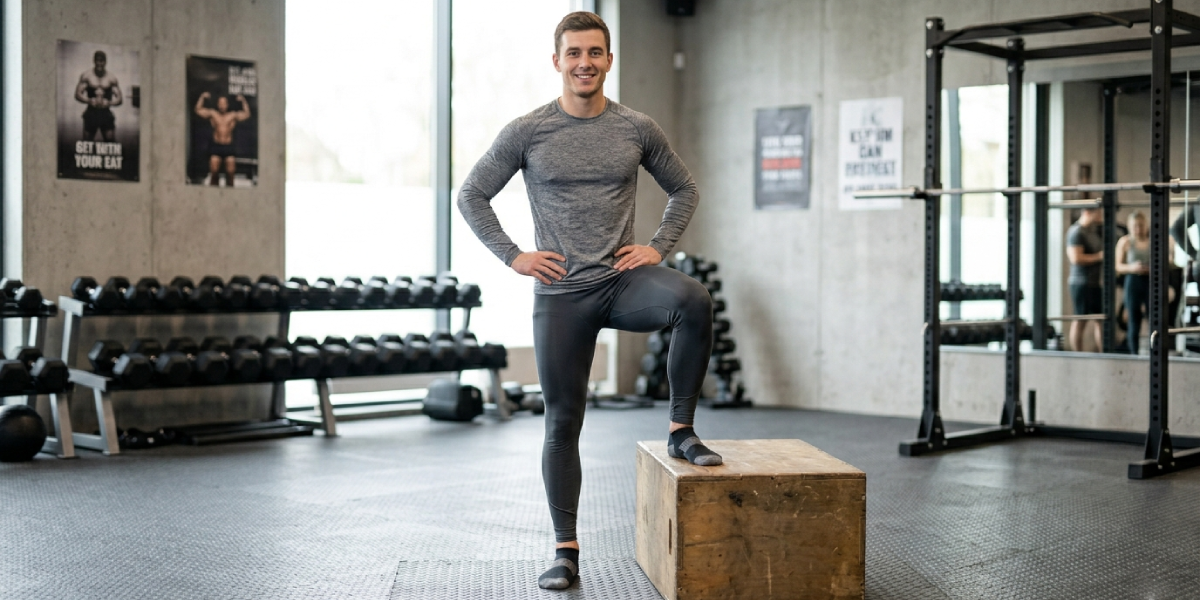
Proper technique is essential to get results and avoid compensating with less productive muscle patterns. Follow these step-by-step instructions carefully.
Starting Position
Stand beside a wall, chair, or raised surface that is approximately knee height. Place the foot of your non-stance leg on the surface with your knee bent to roughly 90 degrees, as if you are striking the classic Captain Morgan pose. Rest both hands on your hips. Your standing foot should be flat on the floor, pointing straight ahead.
Body Alignment
Before you begin the hold, check your alignment. Your hips should be level and square. Your torso should be upright without any lean to either side. Your standing knee should be soft, meaning slightly bent rather than locked out. Your shoulders should remain relaxed and away from your ears.
The Hold
Once your position is set, focus on contracting the glute of your standing leg. Imagine you are trying to push the floor away from you through your standing foot. Actively resist any tendency for the hip of your elevated leg to drop below the level of your standing hip. Hold this position for the prescribed duration, typically between 20 and 60 seconds per set depending on your fitness level.
Breathing and Bracing
Breathe normally throughout the hold. Avoid holding your breath, which creates unnecessary tension and reduces the quality of stabilizer activation. Maintain a mild brace through your core, as though you are gently bracing for a light tap to the abdomen, without bearing down forcefully.
Sets and Repetitions
For beginners, start with two to three sets of a 20-second hold per leg. As your stability improves, progressively increase the hold duration toward 45 to 60 seconds. More advanced practitioners can add challenge by performing the exercise on an unstable surface such as a foam pad, closing the eyes, or adding gentle arm movements to increase the demand on the stabilizers.
Common Mistakes and How to Fix Them
Even straightforward exercises can be performed incorrectly in ways that reduce their effectiveness. Watch for these common errors when practicing the Captain Morgan exercise.
Allowing the Pelvis to Drop
This is the most frequent error and often indicates that the gluteus medius needs significant strengthening. If your hip on the elevated leg side drops below the level of your standing hip, you are not achieving the intended training effect. Focus on squeezing the glute of your standing leg and try reducing the hold time until you can maintain level hips consistently.
Leaning the Trunk to the Side
Leaning your torso toward the standing leg is a common compensation that reduces the load on the hip abductors by shifting the center of mass. Keep your torso upright and resist the urge to lean. If leaning feels almost involuntary, it is a sign that your glute medius needs more time and progressive training before increasing hold duration.
Locking the Standing Knee
Hyperextending the standing knee shifts the demand away from the glute and onto passive joint structures. Keep a slight bend in the knee throughout the hold to ensure the muscles remain actively engaged.
Looking Down
Your gaze affects your balance. Looking down at the floor encourages forward head posture and can disrupt your equilibrium. Keep your gaze level and fixed on a stationary point straight ahead.
Rushing Through the Hold
Stability exercises require patience. Cutting a hold short before reaching the prescribed duration limits the neuromuscular adaptation. If you find it difficult to maintain correct form for the full duration, reduce the time rather than sacrificing technique.
Captain Morgan Exercise Progressions
Once you have mastered the basic hold with perfect form, you can progress the exercise in several ways to continue building strength and coordination.
Unstable Surface
Performing the Captain Morgan exercise on a foam balance pad or wobble board increases the demand on proprioceptive pathways and ankle stabilizers. Start with shorter hold times when you first introduce an unstable surface.
Eyes Closed
Removing visual input forces the nervous system to rely more heavily on vestibular and proprioceptive feedback. This is a simple but highly effective progression for improving balance in older adults and athletes alike.
Upper Body Perturbations
Adding light resistance band pulls to the arms or having a partner provide gentle taps challenges the stability system in a more dynamic way, mimicking real-world demands more closely.
Weighted Vest or Dumbbell
Adding load through a weighted vest or holding a light dumbbell increases the demand on the hip abductors, progressing the exercise into a more strength-oriented drill.
Who Should Do the Captain Morgan Exercise
The Captain Morgan exercise is appropriate for nearly everyone, but it is especially beneficial for specific populations. Runners dealing with knee pain or hip drop during their gait cycle will find it invaluable. Individuals recovering from knee surgery, hip replacement, or ankle sprains often encounter it in their rehabilitation protocols.
Older adults working to maintain balance and reduce fall risk can use it safely with minimal equipment.
For those managing their overall health and wellness through structured movement, this exercise pairs well with other hip-dominant movements such as glute bridges, clamshells, and lateral band walks. It can also complement a broader program that includes monitoring body composition metrics.
If you are working toward specific fitness goals, tools such as a BMI calculator can help you track your progress within a broader health framework alongside your strength and stability training.
How to Integrate the Captain Morgan Exercise Into Your Routine
The Captain Morgan exercise is versatile enough to fit into multiple points within a training session. As a warm-up drill, it activates the gluteus medius before lower body strength work, which can improve motor recruitment during squats, lunges, and deadlifts.
As a corrective exercise, it can be performed between sets as active rest to reinforce hip stability patterns without fatiguing prime movers. As a standalone protocol, three sets of 45-second holds per side performed three to four times per week is sufficient to produce meaningful improvements in hip stability within four to six weeks of consistent practice.
Captain Morgan Exercise vs. Other Hip Stability Drills
| Exercise | Primary Target | Equipment Needed | Difficulty Level |
|---|---|---|---|
| Captain Morgan Exercise | Gluteus medius, balance | None (chair optional) | Beginner to Intermediate |
| Clamshell | Gluteus medius | Resistance band optional | Beginner |
| Side-lying Hip Abduction | Gluteus medius, TFL | None | Beginner |
| Single-Leg Deadlift | Glutes, hamstrings, balance | Dumbbell optional | Intermediate to Advanced |
| Lateral Band Walk | Gluteus medius, minimus | Resistance band | Beginner to Intermediate |
Frequently Asked Questions
What exactly is the Captain Morgan exercise?
The Captain Morgan exercise is a single-leg stability drill where you stand on one leg with the opposite foot resting on a raised surface and your hands placed on your hips. It replicates the stance of the Captain Morgan rum mascot and is designed to train hip abductor strength, pelvic stability, and balance.
What muscles does the Captain Morgan exercise target?
The exercise primarily targets the gluteus medius, the muscle responsible for preventing hip drop during single-leg stance. It also engages the gluteus minimus, tensor fasciae latae, deep hip rotators, core stabilizers, and the muscles of the standing foot and ankle.
Is the Captain Morgan exercise good for knee pain?
Yes, it is often prescribed in rehabilitation settings for individuals with patellofemoral pain syndrome and other knee conditions linked to weak hip abductors. Strengthening the gluteus medius through this exercise helps reduce excessive inward collapse of the knee during weight-bearing activities.
How long should I hold the Captain Morgan exercise position?
Beginners should aim for holds of 20 to 30 seconds per side. As your strength and coordination improve, work toward holds of 45 to 60 seconds. Perform two to three sets per leg, three to four times per week for best results.
Can beginners do the Captain Morgan exercise?
Absolutely. The Captain Morgan exercise requires no equipment, places minimal stress on the joints, and can be scaled to any fitness level by adjusting hold duration. Beginners should start near a wall for additional support if needed and gradually increase the hold time as stability improves.
What are the most common mistakes during the Captain Morgan exercise?
The most frequent errors include allowing the pelvis to drop toward the raised leg side, leaning the trunk laterally toward the stance leg, hyperextending the standing knee, and looking down at the floor. All of these compensations reduce the effectiveness of the exercise and should be corrected before increasing duration or adding progressions.
How does the Captain Morgan exercise help with running injuries?
Runners frequently develop hip drop gait patterns due to gluteus medius weakness, which increases load on the IT band, patellofemoral joint, and lower back. By strengthening the hip abductors with the Captain Morgan exercise, runners can correct this pattern, reduce joint stress, and lower their risk of common overuse injuries.
How often should I do the Captain Morgan exercise?
For general fitness and injury prevention, performing the exercise three to four times per week is ideal. In a rehabilitation context, your physical therapist may prescribe it daily. Because it is a low-intensity stability drill, recovery between sessions is not a limiting factor for most people.
Can I make the Captain Morgan exercise harder?
Yes. Progressions include performing the hold on an unstable surface such as a foam pad, closing your eyes to remove visual balance cues, adding light upper body resistance band movements, or wearing a weighted vest to increase the demand on the hip abductors.
Is the Captain Morgan exercise the same as a single-leg squat?
No. While both involve standing on one leg, the single-leg squat is a dynamic, strength-oriented movement that primarily trains the quadriceps and glutes through a full range of motion. The Captain Morgan exercise is a static stability hold focused specifically on hip abductor endurance and pelvic control at a fixed joint position.