


Knowing how to warm up before exercise is one of the most important habits you can build for long-term fitness success. Whether you are heading to the gym, going for a run, or starting a home workout, skipping the warm-up is one of the most common mistakes people make.
A proper warm-up does not just loosen your muscles. It prepares your entire body and mind for the physical demands ahead, reducing the risk of strains, pulls, and more serious injuries.
In this guide, you will learn the science behind warming up, practical warm-up techniques for different types of exercise, and how to build a routine that fits your schedule without cutting corners on safety.
Why Warming Up Before Exercise Matters
A warm-up gradually raises your heart rate, increases blood flow to working muscles, and elevates your core body temperature. When your muscles are warm, they become more pliable, meaning they contract and relax more efficiently and are far less prone to tearing under sudden load.
Cold muscles are stiff muscles. Asking them to perform high-intensity movements without preparation is like trying to stretch a rubber band straight out of the freezer. The tissue simply is not ready for sudden demands.
Beyond the physical benefits, a warm-up also serves an important neurological function. It activates the motor pathways between your brain and your muscles, improving coordination, reaction time, and movement quality. Athletes and personal trainers consistently report that exercise performed after a proper warm-up feels smoother, stronger, and more controlled.
The Key Benefits of a Proper Warm-Up
- Reduced injury risk: Warm muscles absorb impact better and are more resistant to micro-tears during sudden or explosive movements.
- Improved performance: Elevated muscle temperature allows faster and more forceful muscle contractions, directly boosting strength and speed output.
- Better joint lubrication: Synovial fluid, which cushions your joints, becomes less viscous as body temperature rises, allowing for smoother range of motion.
- Cardiovascular preparation: Gradually increasing your heart rate helps prevent the dizziness or chest discomfort that can come with suddenly jumping into intense activity.
- Mental focus: A deliberate warm-up routine signals to your brain that it is time to perform, helping you concentrate and move with intention.
How Long Should a Warm-Up Be?
For most people, a warm-up should last between five and fifteen minutes. The ideal duration depends on factors including workout intensity, your current fitness level, your age, and the ambient temperature. Cold environments require longer warm-ups because the body loses heat more quickly, making it harder to raise tissue temperature.
A beginner preparing for a light jog may only need five to seven minutes. An experienced lifter about to attempt heavy compound movements should invest ten to fifteen minutes in a thorough warm-up. Older adults and those recovering from previous injuries should always err on the side of a longer, more gradual preparation phase.
The Two Essential Components of Every Warm-Up

1. General Warm-Up
The general warm-up raises your core body temperature and gets blood circulating to your muscles. This phase should be low in intensity and involve large muscle groups. Good options include light jogging on the spot, brisk walking, cycling at an easy pace, rowing at low resistance, or jumping jacks.
This phase typically lasts three to five minutes. By the end, you should feel slightly warmer, breathing a little faster, but not breathless or fatigued. Light perspiration is a good indicator that your body temperature has risen appropriately.
2. Dynamic Stretching and Movement Preparation
Once your general warm-up is complete, you move into dynamic stretching. Unlike static stretching, which holds a position for an extended period, dynamic stretching involves controlled, active movements that take your joints through their full range of motion.
Research consistently shows that dynamic stretching before exercise improves power and performance, while static stretching performed before high-intensity work can temporarily reduce force output. Save deep static stretches for your cool-down.
Effective dynamic warm-up movements include leg swings (forward and lateral), hip circles, arm circles, walking lunges, high knees, bodyweight squats, inchworms, and torso rotations. Choose movements that mirror the exercises you are about to perform.
Warm-Up Routines for Different Types of Exercise
One of the most practical principles in exercise science is specificity. Your warm-up should prepare you for the specific demands of the workout you are about to do. A runner needs different preparation than a weightlifter. Below is a breakdown by activity type.
Warm-Up for Strength Training
Start with three to five minutes of light cardio, then move into dynamic stretching targeting the joints you will load. Before your working sets, perform warm-up sets with lighter weights. For example, if you plan to squat 80 kilograms, do a set with just the bar, then a set at 40 kilograms, then 60 kilograms before your first working set. This primes the movement patterns and prepares your connective tissue.
Warm-Up for Running or Cardio
Begin with a brisk five-minute walk or very easy jog. Follow this with dynamic movements such as leg swings, hip openers, ankle circles, and walking lunges. Gradually increase your pace over the first five minutes of the run itself. Jumping straight into your target pace from a standing start puts enormous stress on cold tendons and muscles.
Warm-Up for Sports and Group Fitness
Sport-specific warm-ups should include directional changes, acceleration and deceleration movements, and sport-specific drills at reduced intensity. A football player might jog, shuffle laterally, backpedal, and perform light passes before a match. A group fitness participant should follow the instructor’s warm-up segment carefully rather than arriving late and jumping in mid-session.
Warm-Up for Home Workouts
Home exercisers often skip the warm-up because there is no commute or changing room time to signal the transition into workout mode. Combat this by building a short warm-up ritual that you always do before starting your home exercise session. Even five minutes of marching in place, arm circles, and bodyweight squats makes a measurable difference in your safety and performance.
Common Warm-Up Mistakes to Avoid
| Mistake | Why It Is Problematic | What to Do Instead |
|---|---|---|
| Doing only static stretches | Can reduce power output and does not adequately raise muscle temperature | Use dynamic movements before exercise; save static stretching for cool-down |
| Warming up too briefly | Leaves muscles and joints underprepared, especially in cold conditions | Spend at least 5 minutes; 10 to 15 minutes for high-intensity sessions |
| Making the warm-up too intense | Can fatigue muscles before the main workout even begins | Keep warm-up intensity at 40 to 60 percent of maximum effort |
| Skipping movement-specific drills | Fails to activate the exact muscles and motor patterns needed | Include movements that mimic your planned exercises at reduced load |
| Ignoring the upper body when training legs | Leaves the thoracic spine and shoulders stiff, affecting posture and stability | Always include a full-body general warm-up regardless of the focus area |
The Role of Body Weight and Your Health Baseline
Your starting body composition and BMI can influence how your body responds to exercise and how much time you need for preparation. Individuals carrying additional body weight often need a more gradual warm-up to manage cardiovascular load, while those who are very lean may find their muscles cool down quickly between sets and need active rest strategies. Always listen to your body regardless of what a generic programme advises.
Warm-Up Tips for Older Adults and Beginners
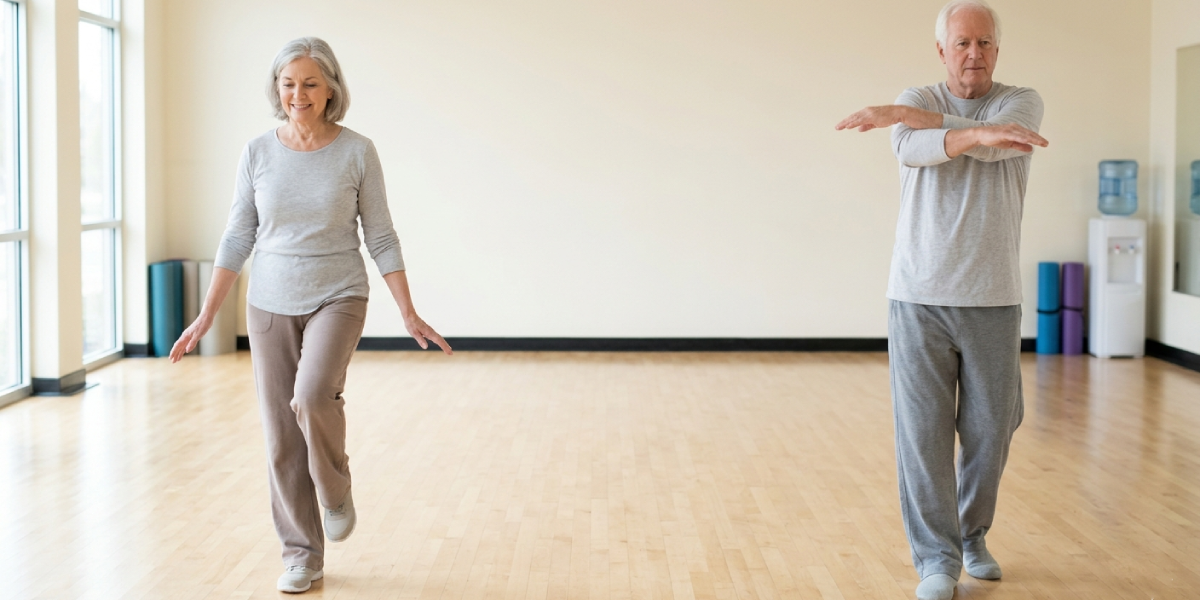
As the body ages, muscle fibres and tendons lose some of their elasticity. Synovial fluid production decreases and recovery from micro-trauma takes longer. This makes a thorough warm-up even more essential for adults over forty and especially those over sixty.
Older adults should extend the general warm-up phase to at least seven to ten minutes and perform dynamic stretching more slowly and with a smaller range of motion initially, building gradually. Those new to exercise should also err on the side of caution.
Starting with longer, gentler warm-ups builds good habits and reduces the likelihood of early-stage injuries that cause people to abandon fitness programmes altogether.
Activation Exercises: The Often Overlooked Warm-Up Component
Beyond general warm-up and dynamic stretching, many fitness professionals recommend a brief period of muscle activation exercises. These are targeted movements designed to switch on specific muscles that are often underactive due to sedentary daily habits.
The glutes, for example, are chronically underactive in people who sit at desks for long periods. Performing clamshells, glute bridges, or banded lateral walks before a lower body session ensures the glutes fire correctly during squats and lunges, protecting the knees and lower back.
Similarly, performing scapular retractions or face pulls before an upper body push session activates the rotator cuff and rear deltoid muscles, improving shoulder stability and reducing impingement risk.
Building a Consistent Warm-Up Habit
The most effective warm-up is the one you actually do every time. Here are practical strategies to make it a non-negotiable part of your routine.
- Attach it to a trigger: Always begin your warm-up the moment you put on your gym shoes or press play on your workout playlist.
- Keep it short enough to feel doable: Even a five-minute warm-up is vastly better than nothing. If you are genuinely pressed for time, compress the warm-up rather than skip it entirely.
- Use a consistent sequence: Having a set order of movements removes decision fatigue and ensures you never forget a key step.
- Track the difference: Many people who start warming up properly report feeling dramatically better mid-workout and experience fewer days of unexpected soreness or stiffness.
Frequently Asked Questions
Is it necessary to warm up before every workout?
Yes, a warm-up should precede every exercise session regardless of the intensity. Even a short five-minute warm-up reduces injury risk, improves neuromuscular activation, and prepares your cardiovascular system for the demands ahead.
Can I skip the warm-up if I am short on time?
You should never skip it entirely, but you can shorten it. Even three to five minutes of dynamic movement is better than jumping straight into intense activity. A condensed warm-up of marching in place, arm circles, and bodyweight squats covers the most critical bases.
Is stretching the same as warming up?
No. Stretching and warming up serve different purposes. A warm-up raises body temperature and heart rate. Static stretching alone does not adequately prepare the body for exercise and can actually reduce muscle power if performed before high-intensity work. Dynamic stretching is a component of a warm-up, but is not the entire warm-up.
How do I know when I am properly warmed up?
You are properly warmed up when you feel a mild increase in body heat, your breathing rate has risen slightly, and your joints feel more fluid and less stiff. Light sweating can be a good indicator, particularly in cooler environments. You should feel ready to move but not fatigued.
What is the difference between a warm-up and an activation exercise?
A warm-up broadly raises body temperature and heart rate. Activation exercises are specific movements designed to switch on muscles that are typically underactive, such as the glutes or deep core stabilisers. Activation work is best placed after the general warm-up and before the main workout.
Should my warm-up change depending on the workout I am doing?
Yes. Your warm-up should always include a general phase, but the dynamic and activation components should be specific to the muscles and movements involved in your session. A leg day warm-up should emphasise hip, knee, and ankle mobility, while an upper body session calls for shoulder and thoracic spine preparation.
Is foam rolling part of a warm-up?
Foam rolling, also known as self-myofascial release, can be incorporated at the start of a warm-up to help release muscle tightness and improve range of motion. It is most effective when used on particularly stiff areas before dynamic movement. Keep sessions brief, around sixty to ninety seconds per muscle group.
Can warming up improve my workout performance?
Absolutely. Research has consistently shown that warming up improves muscle contraction speed, power output, and neuromuscular coordination. Athletes who warm up properly consistently outperform those who do not, and recreational exercisers typically find their movements feel more controlled and their strength output higher when properly prepared.
Do I need to warm up differently as I get older?
Yes. As the body ages, muscles and tendons lose some elasticity and joints may produce less synovial fluid. Older adults should allow more time for the general warm-up phase, move more gradually through dynamic stretches, and pay extra attention to any areas of existing stiffness or previous injury before starting their main session.
What happens to the body if you exercise without warming up?
Exercising without a warm-up increases the risk of muscle strains, ligament sprains, and joint injuries. Cold muscles are stiffer, less responsive, and more prone to tearing under sudden load. The cardiovascular system is also unprepared for a sudden spike in demand, which can cause dizziness, early fatigue, or in rare cases in higher-risk individuals, cardiovascular stress.