

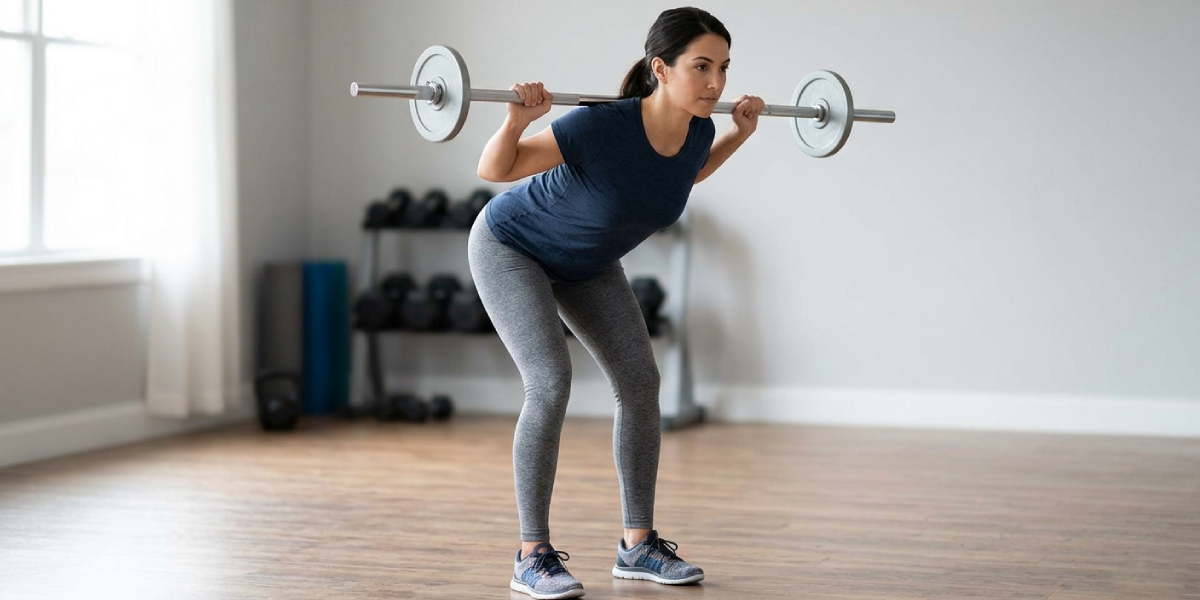
The Good Morning exercise is one of the most effective yet underused movements for developing serious lower back and hamstring strength. If you have been searching for a compound exercise that targets the entire posterior chain, trains hip hinge mechanics, and translates directly into better performance under the barbell, the Good Morning deserves a permanent place in your training program.
In this guide, you will learn exactly how to perform it safely, why it works, and how to program it for lasting results.
What Is the Good Morning Exercise?
The Good Morning is a barbell compound movement that closely resembles a Romanian deadlift in its muscle recruitment but places the load on the upper back rather than in the hands. You position a barbell across your traps or upper back, hinge at the hips with a soft knee bend, lower your torso until it is roughly parallel to the floor, and then drive back up through the hips to the starting position.
The name comes from the motion itself, which mimics the act of bowing forward to greet someone good morning. Despite its simple appearance, the Good Morning demands significant body awareness, core bracing, and hamstring flexibility to execute correctly and safely.
It is favored by powerlifters, strength coaches, and serious gym athletes because of its direct carryover to the squat and deadlift lockout.
Muscles Worked by the Good Morning Exercise
Understanding the muscular demands of this lift helps you appreciate why it is so valuable and why it must be treated with respect. The Good Morning is a posterior chain exercise first and foremost.
- Hamstrings: The primary movers during the hip hinge. They lengthen under load as you lower and contract powerfully during the ascent.
- Glutes: The gluteus maximus acts as the primary hip extensor, driving the hips back to upright at the top of the movement.
- Erector Spinae: The deep muscles running alongside the spine are isometrically loaded throughout the movement to maintain a neutral spine under the barbell.
- Core and Transverse Abdominis: The anterior core braces to prevent spinal flexion and protect the lumbar spine throughout the range of motion.
- Upper Back and Traps: These muscles work to stabilize the barbell and prevent the torso from rounding forward under load.
- Adductors: The inner thigh muscles assist with hip extension and provide medial stability during the hinge pattern.
Good Morning Exercise Benefits You Should Know
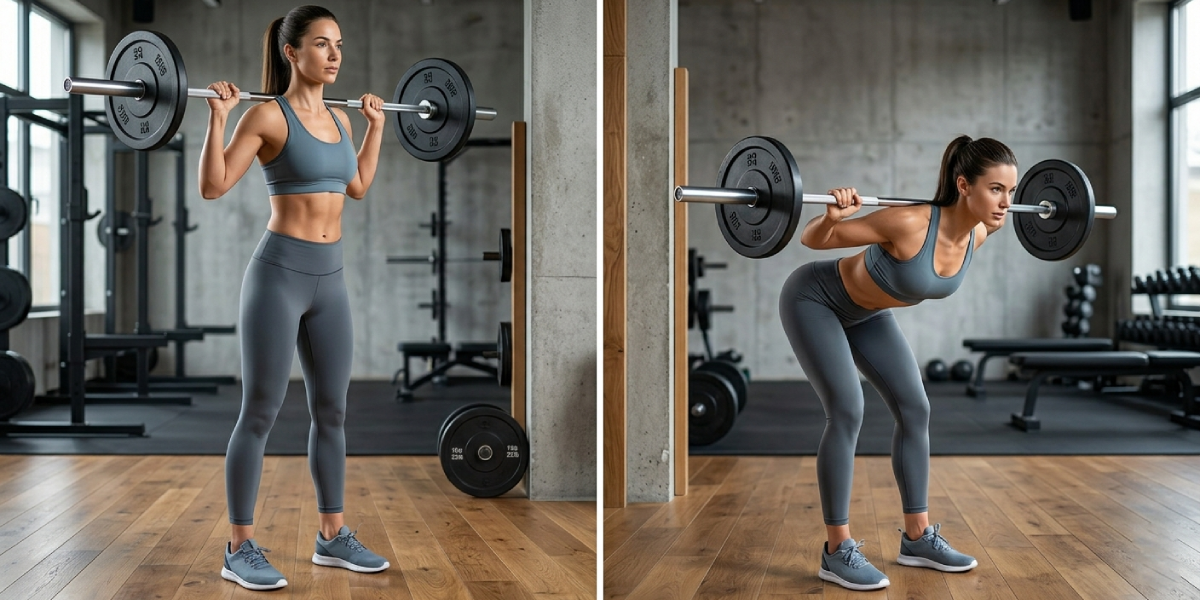
The Good Morning exercise offers a unique set of benefits that many other lower body exercises simply cannot replicate in the same way.
Builds Functional Posterior Chain Strength
Athletes and lifters who struggle with rounding at the bottom of a squat or losing hip drive on a deadlift often have a weak posterior chain. The Good Morning directly addresses this weakness by placing the hamstrings and erectors under prolonged isometric and eccentric tension, building the kind of strength that translates to real-world and competitive performance.
Improves Hip Hinge Mechanics
The hip hinge is one of the most fundamental movement patterns in all of strength training. A properly executed Good Morning forces you to push the hips back, maintain a neutral spine, and control the descent, which are the exact same motor patterns required in the deadlift, Romanian deadlift, and kettlebell swing. Regular practice cements this pattern into muscle memory.
Enhances Hamstring Flexibility Under Load
Unlike static stretching, the Good Morning develops active flexibility by training the hamstrings to lengthen and produce force simultaneously. This is called eccentric strength, and it is far more protective against hamstring strains during athletic activity than passive flexibility alone.
You can explore more movements that develop this kind of flexibility and resilience in our full library of exercise guides and tutorials.
Reduces Lower Back Pain Risk Over Time
A common misconception is that heavy spinal loading causes lower back problems. In reality, weak and deconditioned posterior chain muscles are a leading contributor to chronic lower back discomfort. When programmed intelligently and performed with proper technique, the Good Morning exercise strengthens the erectors, multifidus, and surrounding soft tissue structures that support the lumbar spine.
Transfers Directly to the Squat and Deadlift
Powerlifters have used the Good Morning as a supplemental exercise for decades because it strengthens the exact position where squats and deadlifts are lost, at the point of maximum hip flexion. Building strength in that position reduces injury risk and increases your ability to maintain form when weights become heavy.
Step-by-Step Guide: How to Do the Good Morning Exercise Correctly
Proper technique is non-negotiable with this lift. Follow these steps carefully before adding any significant load to the bar.
Step 1: Set Up the Barbell
Place the barbell in a squat rack at approximately upper chest height. Step under the bar and position it across your upper traps, the same position you would use for a high-bar squat. Grip the bar with both hands just outside your shoulders to create a stable shelf with the muscles of your upper back. Keep your elbows pointing down and slightly back to engage the traps.
Step 2: Unrack and Find Your Stance
Step back from the rack and set your feet at roughly hip-width apart, with toes pointing slightly outward if that feels more natural. Soft bend your knees, meaning unlock them just enough to remove joint stress without turning the movement into a squat. This slight knee bend is critical for protecting the knee joint and allowing a greater range of hip motion.
Step 3: Create Full Body Tension Before the Descent
Take a full diaphragmatic breath and brace your core as if you expect to be punched in the stomach. Squeeze your lats, pack your shoulder blades together, and create as much rigidity through your torso as possible. This full-body tension keeps your spine safe and transfers force efficiently throughout the movement.
Step 4: Initiate the Hip Hinge
Push your hips back behind you rather than bending forward at the waist. This distinction is essential. You are not folding at the lower back. You are pushing the hips rearward while maintaining a neutral spine, which naturally causes your torso to tip forward. Think about trying to touch the wall behind you with your glutes.
Step 5: Lower Under Control
Descend slowly, taking two to three seconds on the way down. Lower until your torso is roughly parallel to the floor, or until your hamstrings reach their end range of stretch without your lower back rounding. Do not chase depth at the expense of spinal position. A slight arch maintained throughout is the target, never a rounded lower back.
Step 6: Drive Back Up Through the Hips
Push the floor away with your feet, drive your hips forward, and return to the upright starting position. Do not hyperextend at the top. Stand tall with glutes squeezed and hips fully extended. Exhale as you return to the top of the movement, then reset your brace before the next rep.
Good Morning Exercise Form Checklist
| Form Point | What to Do | Common Mistake |
|---|---|---|
| Spine Position | Neutral arch from neck to tailbone throughout | Rounding the lower back under load |
| Knee Position | Soft bend maintained, knees tracking over toes | Locking knees out completely |
| Hip Movement | Push hips back during descent | Bending forward at the waist instead |
| Core Bracing | Full 360-degree brace before each rep | Breathing mid-rep or losing tension |
| Bar Position | Stable on upper traps, elbows down | Bar rolling up the neck or shoulders |
| Descent Speed | Controlled, 2 to 3 seconds down | Dropping quickly without tension |
| Depth | Torso parallel or within hamstring range | Going past hamstring capacity and rounding |
Good Morning Exercise Variations to Progress Your Training
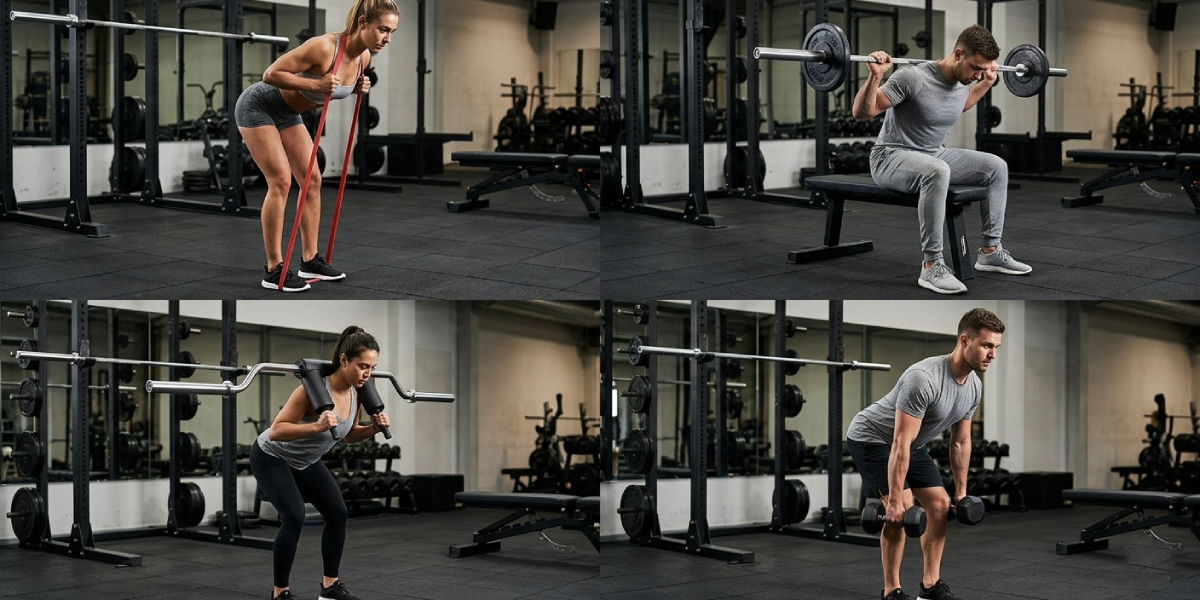
Once you have mastered the standard Good Morning with a conservative load, several variations allow you to progress, specialize, or address specific weaknesses.
Banded Good Morning
Loop a resistance band under your feet and over your upper back in place of a barbell. This is the ideal starting point for beginners or anyone returning from a lower back injury. The band provides accommodating resistance, meaning the tension increases as you stand up, which reinforces good hip extension habits and reduces compressive load on the spine at the bottom position.
Seated Good Morning
Perform the movement while seated on a bench with the bar on your back. This variation eliminates leg drive entirely and places the entire workload on the spinal erectors and hamstrings. It is an advanced variation primarily used by powerlifters to build maximal lower back strength in a shortened range of motion.
Safety Bar Good Morning
The safety squat bar shifts the center of gravity slightly forward, making it harder to maintain an upright torso. This forces greater upper back and erector engagement and is a popular choice for athletes who want to increase posterior chain resilience without placing a straight bar on their neck.
Dumbbell Good Morning
Hold a dumbbell in each hand at your sides or fold your hands behind your head. This variation removes barbell loading and is excellent for beginners learning the hip hinge pattern, people with limited shoulder mobility, or as a warm-up movement before heavier barbell work.
How to Program the Good Morning Exercise
The Good Morning is a supplemental or accessory exercise in most strength programs rather than a primary lift, though some powerlifters have historically used it as a primary strength movement with very heavy loads. For most athletes and gym-goers, the following programming guidelines apply:
- Load: Start at 20 to 30 percent of your squat one-rep max and build slowly. The Good Morning is humbling in terms of the weight you can safely use compared to a squat or deadlift.
- Sets and Reps: Three to four sets of six to ten repetitions works well for strength and hypertrophy of the posterior chain. Higher rep ranges of twelve to fifteen are appropriate for beginners or when used as a warm-up.
- Frequency: Once or twice per week is sufficient. Perform it after your main strength lifts, not before, as it is fatiguing for the stabilizing muscles of the spine.
- Progression: Add weight in small increments of two and a half to five pounds only when you can complete all sets with perfect form.
Who Should and Should Not Do the Good Morning Exercise
The Good Morning is appropriate for intermediate to advanced trainees who have already developed a foundation of hip hinge strength through deadlifts and Romanian deadlifts. True beginners are better served by mastering bodyweight and dumbbell hinge patterns first before progressing to a barbell Good Morning.
Individuals with acute lower back injuries, lumbar disc issues, or active sciatic nerve symptoms should consult a qualified sports medicine physician or physiotherapist before attempting this exercise. This is not an exercise to push through pain on.
Understanding your body composition and overall fitness level is a useful starting point, and our BMI calculator can give you a baseline measure to track your fitness journey over time.
If you have concerns about the intersection of your training habits and your overall health, the resources in our health and wellness section offer practical, evidence-based guidance on everything from recovery to nutrition strategies for active individuals.
Common Good Morning Exercise Mistakes and How to Fix Them
Rounding the Lower Back
This is the most dangerous error in the Good Morning and usually happens when the weight is too heavy, the hamstrings are too tight to achieve the required range of motion, or the lifter has not learned to brace properly. Fix it by reducing the load significantly, adding hamstring flexibility work, and filming yourself from the side to monitor spinal position in real time.
Treating It Like a Squat
Some lifters bend the knees too deeply and turn the Good Morning into a squat-like movement, which shifts load away from the hamstrings and erectors. Keep a minimal soft knee bend throughout and focus entirely on the hip hinge motion.
Using Too Much Weight Too Soon
The posterior chain is the most powerful group of muscles in the body, but the connective tissue and stabilizing muscles that support it take time to adapt to loading. Progressing too quickly is a leading cause of lower back strains with this exercise. Patience and conservative loading are mandatory.
Losing Bar Stability
If the bar is sliding up your neck or rolling around on your back during the movement, it indicates a weak upper back shelf or an incorrect grip width. Squeeze your shoulder blades together aggressively before unracking, and ensure the bar sits firmly on your traps, not on your cervical spine.
Frequently Asked Questions
Is the Good Morning exercise safe for the lower back?
Yes, when performed with proper technique and appropriate loading, the Good Morning exercise is not only safe but actively beneficial for the lower back. It strengthens the erector spinae and surrounding musculature that supports the lumbar spine. The risks come from poor form, excessive load, or attempting the exercise with pre-existing acute injuries without professional guidance.
How much weight should I use for the Good Morning exercise?
Beginners should start with just the barbell or even a broomstick to learn the movement pattern. Intermediate lifters typically use between 20 and 40 percent of their back squat one-rep max as a working weight. Never sacrifice form for heavier loading on this exercise.
What is the difference between a Good Morning and a Romanian deadlift?
Both movements train the hip hinge pattern and work the posterior chain in a similar way. The key difference is bar placement. In a Romanian deadlift, the bar is held in the hands and hangs in front of the body. In a Good Morning, the bar sits on the upper back, which changes the balance demands and places greater emphasis on the spinal erectors as stabilizers.
Can beginners do the Good Morning exercise?
Absolute beginners should first develop a solid hip hinge pattern using bodyweight, resistance bands, or dumbbells before progressing to a barbell Good Morning. Once you can perform Romanian deadlifts and hip hinges with good form, you are ready to introduce the Good Morning with a very light load.
How often should I do Good Mornings in my program?
One to two times per week is the recommended frequency for most athletes. The exercise is demanding on the posterior chain and spinal stabilizers, so adequate recovery between sessions is important. It is best placed after your primary compound lifts as an accessory movement.
Will the Good Morning exercise help with my squat and deadlift?
Yes, significantly. The Good Morning directly trains the posterior chain muscles responsible for maintaining spinal position and generating hip extension power during both the squat and deadlift. Powerlifters have long used it as a supplemental exercise to reinforce strength at the sticking point of these competition lifts.
Does the Good Morning exercise build hamstring muscle?
Yes. The hamstrings are under significant eccentric and isometric load throughout the Good Morning exercise. Over time, progressive overload with this movement builds both hamstring strength and hypertrophy, particularly in the proximal hamstring region near the hip, which is often underdeveloped in athletes who focus primarily on leg curls and deadlifts.
What should I feel during a Good Morning exercise?
You should feel a strong stretch through the hamstrings during the descent and a powerful contraction through the glutes and hamstrings during the ascent. The lower back and upper back should feel isometrically engaged throughout but should not be the primary source of movement or burning sensation. If you feel pain or sharp discomfort in the lower spine, stop and reassess your form and loading.