


Learning how to make exercise a part of your lifestyle is one of the most impactful decisions you can make for your long-term health and well-being. Whether you are just starting out or returning after a long break, the key is not perfection but consistency.
This guide walks you through practical, research-backed strategies that help you build lasting habits, stay motivated, and enjoy the process of moving your body every single day.
Why Most People Struggle to Stay Active
Despite knowing the benefits of regular physical activity, a large number of adults still fall short of recommended exercise guidelines. The reasons are familiar: busy schedules, low energy after work, lack of motivation, and not knowing where to begin.
Many people treat exercise as a short-term fix tied to a specific goal, such as losing weight for an event, rather than a permanent pillar of their daily routine. When the goal is achieved or abandoned, the habit disappears with it.
The solution is a mindset shift. Instead of thinking about exercise as something you do temporarily, start treating it as something you simply are. Active people do not constantly debate whether to work out. It becomes as automatic as brushing their teeth. Getting to that point takes intention, strategy, and patience.
Start Small and Build Momentum
One of the most common mistakes beginners make is starting too hard too fast. They commit to daily intense workouts, feel sore and exhausted within a week, and quit. The smarter approach is to begin with what feels almost too easy and gradually increase from there.
If you have been sedentary, start with 15 to 20 minutes of walking three times a week. Once that feels comfortable, increase the duration or frequency. This approach, often called progressive overload in fitness science, applies not just to strength training but to any form of physical activity.
Small wins build confidence, and confidence builds consistency.
Choose Activities You Actually Enjoy

There is no single exercise that everyone must do. The best workout is the one you will actually show up for. If you hate running, you are unlikely to stick to a running program no matter how many motivational posts you read. Explore different types of movement until you find something that feels rewarding rather than punishing.
Some people thrive in group fitness classes because of the social energy. Others prefer solo workouts like cycling, swimming, or hiking. You might enjoy a variety of exercise formats that keep things fresh and prevent boredom. The goal is to find what excites you enough to come back repeatedly.
Schedule Exercise Like an Appointment
Waiting until you feel like exercising is a strategy that rarely works. Motivation is unreliable. What works instead is scheduling your workouts in advance and treating them with the same commitment you would give a doctor’s appointment or an important meeting.
Look at your weekly calendar and identify specific time slots for exercise. Morning workouts work well for many people because they get it done before the demands of the day take over. Evening sessions work better for others.
There is no universally correct time, but there is a consistently scheduled time that works for you. Put it in your calendar, set a reminder, and protect that block.
Build a Habit Stack Around Movement
Habit stacking is a technique popularized by behavioral researchers that involves linking a new habit to an existing one. For example, if you already make coffee every morning, you could commit to doing a 10-minute stretch or bodyweight routine while the coffee brews.
If you watch television in the evening, you could add light movement like walking on a treadmill or doing floor exercises during that time.
By attaching exercise to something already embedded in your daily routine, you reduce the mental effort required to get started. Over time, the new behavior becomes automatic and the trigger cue makes it feel natural.
Use the Power of Environment Design
Your environment shapes your behavior more than willpower does. If your workout clothes are buried in a drawer and your gym bag is unpacked in a closet, you are creating unnecessary friction between yourself and exercise. Reduce that friction deliberately.
- Lay out your workout clothes the night before
- Keep your gym bag packed and visible by the door
- Set up a small home workout space with a mat and basic equipment
- Place your running shoes where you cannot ignore them
- Remove obstacles that make skipping feel easier than going
Conversely, make inactivity slightly less convenient. Remove temptations that compete with your workout time and create an environment that pulls you toward movement instead of away from it.
Track Your Progress to Stay Motivated
Seeing progress is one of the most powerful motivators there is. When you can look back and see how far you have come, skipping a session feels like a step backward rather than a harmless exception. Tracking does not need to be complicated.
A simple notebook, a fitness app, or even checkmarks on a wall calendar can be enough. Log your workouts, note how you felt, track milestones like your first mile run or your first unassisted pull-up. Over time, these records become a source of pride and a compelling reason to keep going.
You can also monitor broader health metrics using a BMI calculator to understand your body composition progress alongside your fitness journey.
Make Social Accountability Part of Your Plan
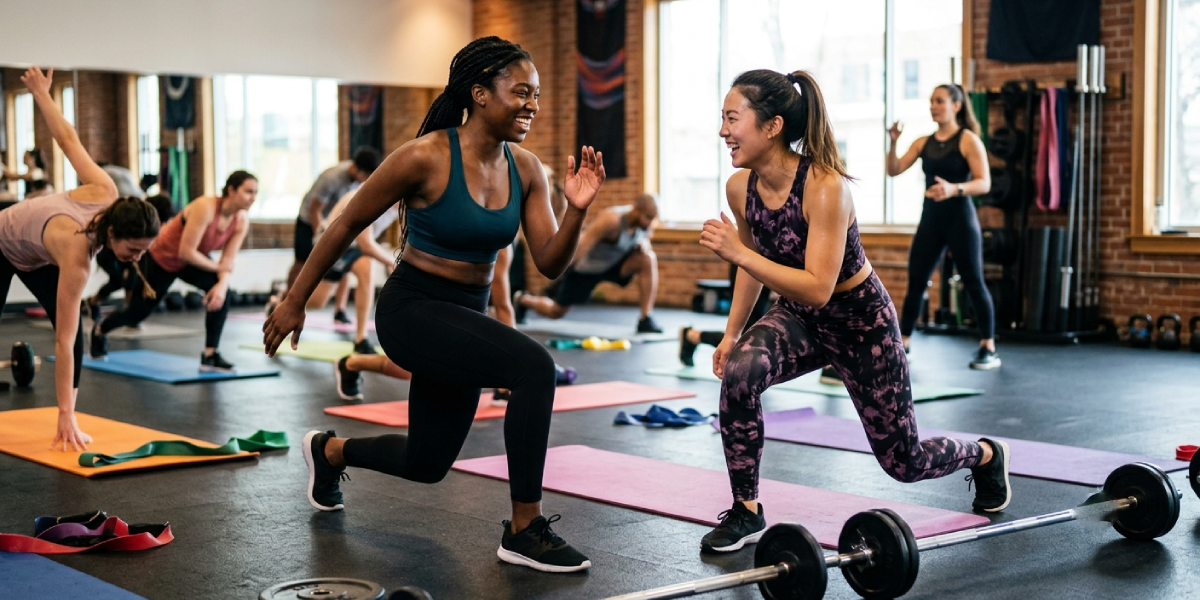
Working out with a friend, joining a fitness class, or signing up for a challenge creates social accountability that makes it harder to bail. When someone else is counting on you to show up, the bar for skipping gets much higher. You may feel fine letting yourself down, but letting a friend down feels different.
If in-person accountability is not an option, online fitness communities can provide the same effect. Sharing your goals publicly, participating in group challenges, or even just posting your completed workouts can create a sense of commitment to a community that keeps you consistent.
Understand the Role of Rest and Recovery
Building exercise into your lifestyle does not mean exercising every single day without rest. Rest is not laziness. It is a critical component of any sustainable fitness routine. Muscles repair and grow stronger during recovery periods, not during the workout itself. Overtraining leads to burnout, injury, and eventually complete dropout.
Plan at least one or two full rest days per week. Incorporate active recovery on those days if you prefer to stay moving, such as gentle yoga, a casual walk, or light stretching. Listening to your body is a skill that takes time to develop, but it is essential for keeping exercise sustainable over the long term.
Nutrition as a Foundation for an Active Lifestyle
Exercise and nutrition work together. You cannot outrun a poor diet, but you also cannot fuel demanding workouts without proper nutrition. As you build your exercise habit, pay attention to what you eat and when. Prioritize whole foods, adequate protein for muscle repair, complex carbohydrates for sustained energy, and plenty of hydration.
This does not require a restrictive diet. It simply means becoming more conscious of how food affects your energy levels, performance, and recovery. Understanding the connection between your eating habits and your exercise results deepens your investment in both and reinforces the broader healthy lifestyle you are building.
Set Goals That Go Beyond Appearance
Appearance-based goals, such as losing a certain number of pounds or getting a flat stomach, can provide initial motivation but tend to fade over time. Performance-based goals are far more durable. Aiming to run a 5K without stopping, do 20 push-ups in a row, or hike a challenging trail shifts the focus from how you look to what your body can do. That shift is powerful because it creates intrinsic satisfaction that appearance goals rarely provide.
Celebrate non-scale victories along the way: better sleep, improved mood, increased energy, less back pain, stronger posture. These are the real rewards of consistent movement, and recognizing them makes the habit feel worthwhile independent of any aesthetic outcome.
How to Handle Setbacks Without Quitting
Setbacks are inevitable. Illness, travel, work stress, family demands, and simply losing momentum are all part of any long-term fitness journey. The difference between people who stay active for decades and those who quit after a few months is not that the former never miss workouts. It is that they do not let one missed week turn into one missed month.
Adopt the two-day rule: never skip more than two consecutive days. If life gets in the way, that is fine. Get back to it. Remove guilt from the equation because guilt breeds avoidance. Instead, treat each return to exercise after a break as a fresh start and a small victory in itself.
The Long Game: Exercise for Life
The goal of making exercise a part of your lifestyle is not to look good for a season. It is to build a body and a mindset that supports a long, energetic, and independent life. Research consistently shows that regular physical activity reduces the risk of chronic disease, improves mental health, sharpens cognitive function, and extends life expectancy.
People who maintain active lifestyles into their 60s, 70s, and beyond do so because they started treating movement as non-negotiable early on. They built systems, not just intentions. They chose enjoyment over punishment. And they gave themselves permission to be imperfect while still showing up.
Start where you are. Use what you have. Do what you can. That is all it takes to begin the journey toward a genuinely active life.
Frequently Asked Questions
How long does it take to make exercise a habit?
Research suggests it takes anywhere from 21 to 66 days to form a new habit, depending on the person and the behavior. For exercise, most people find that after four to six weeks of consistent practice, it begins to feel automatic rather than effortful. Sticking with it through the first month is the most critical phase.
How much exercise do I need each week to see results?
The general recommendation from major health organizations is at least 150 minutes of moderate-intensity aerobic activity per week, combined with two or more days of strength training. That breaks down to about 30 minutes most days of the week. However, even smaller amounts are beneficial, especially when starting from a sedentary baseline.
What should I do if I do not have time for long workouts?
Short workouts still count. Research supports the effectiveness of 10 to 20 minute sessions, particularly high-intensity interval training, for improving cardiovascular health and fitness. Breaking your daily movement into two or three smaller sessions is just as beneficial as one longer session and is often more sustainable for busy schedules.
Is it better to work out in the morning or evening?
The best time to work out is the time you will actually do it consistently. Morning workouts tend to see fewer interruptions and can boost energy levels throughout the day. Evening workouts allow for stronger physical performance for some people due to higher body temperature. Choose based on your schedule and personal preference rather than any supposed optimal window.
How do I stay motivated when progress feels slow?
Focus on the process rather than the outcome. Set performance-based goals, track consistency rather than just results, and celebrate small wins along the way. Progress often happens in ways that are not immediately visible on the scale or in the mirror, such as improved stamina, better sleep, or reduced stress. Keeping a workout journal helps you see how far you have come even when day-to-day changes feel invisible.
Can I build an exercise habit without a gym membership?
Absolutely. Bodyweight exercises, outdoor walking and running, cycling, yoga, resistance bands, and home workout videos all provide effective training without a gym. Many people find home workouts more convenient and therefore more consistent. The gym is one option among many, not a requirement for building an active lifestyle.
What should I do when I feel too tired to exercise?
Differentiate between genuine fatigue, which calls for rest, and low motivation or lethargy, which often improves with movement. If you are truly exhausted or unwell, rest is the right choice. If you are just feeling sluggish, committing to a 10-minute walk or easy session often shifts your energy significantly. Give yourself permission to start small and stop early if needed, but start.
How do I avoid getting bored with the same workout routine?
Variety is essential for long-term adherence. Rotate between different types of exercise, try new classes, set new performance goals, work out with different people, or change your environment by exercising outdoors. Periodically updating your routine every four to six weeks also prevents physical plateaus by challenging your body in new ways.
Do I need to stretch before and after exercise?
A proper warm-up before exercise is important to prepare your joints and muscles and reduce injury risk. Dynamic stretching, meaning controlled movements through a range of motion, is recommended before workouts. Static stretching, where you hold a position for 20 to 30 seconds, is best saved for after exercise when your muscles are warm and pliable. Both contribute to long-term flexibility and injury prevention.
How does regular exercise affect mental health?
Exercise is one of the most well-documented natural interventions for mental health. Regular physical activity reduces symptoms of anxiety and depression, improves mood through the release of endorphins and other neurochemicals, enhances sleep quality, and builds resilience to stress. Many mental health professionals now recommend exercise as a complementary strategy alongside other treatments for conditions like depression and anxiety disorders.